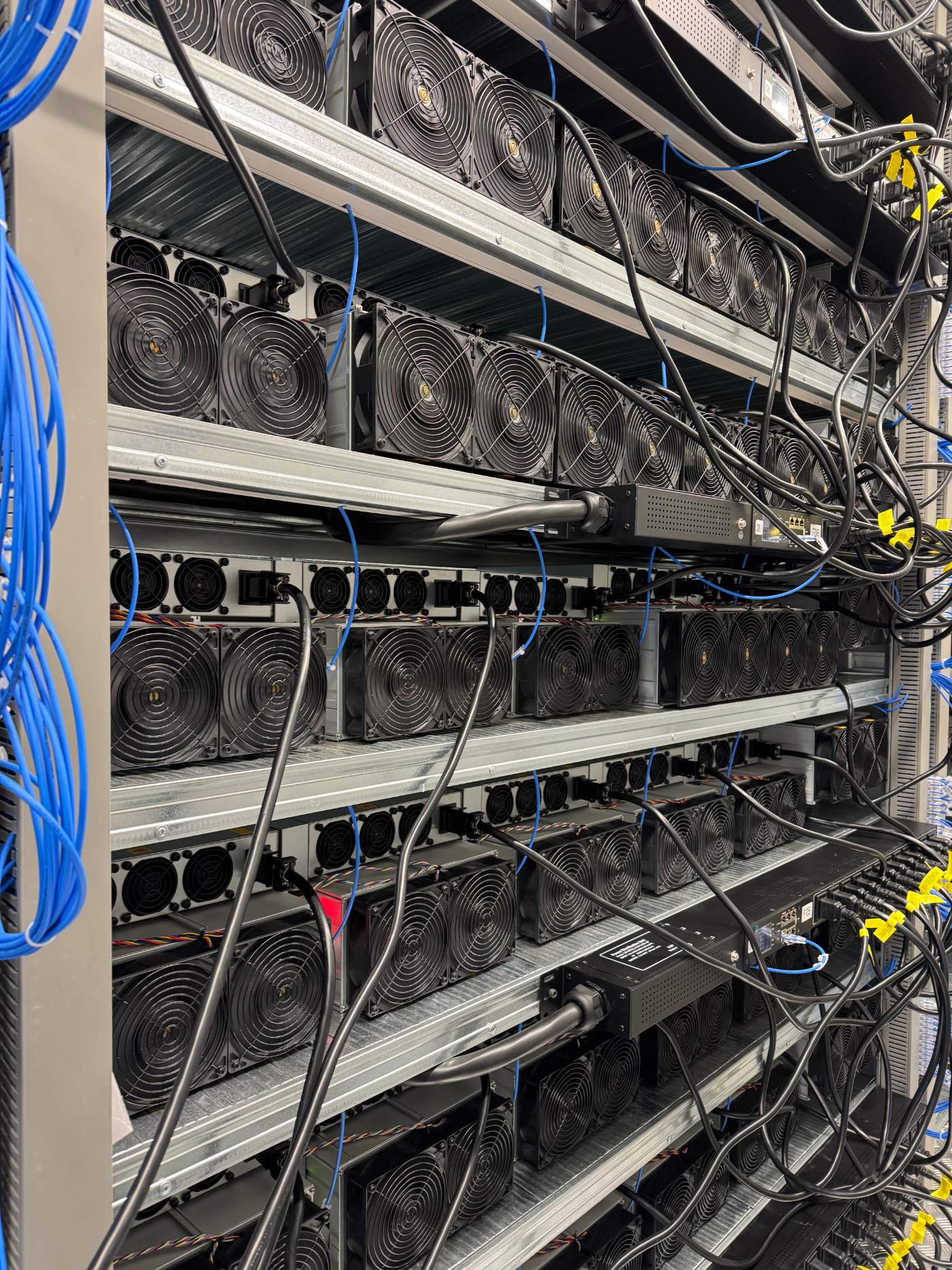
Why the same megawatt costs different amounts depending on where it sits relative to the meter, and what that means for a hosting rate.
One proposal describes its site as a behind-the-meter facility, and a second offer at the same rate per kilowatt hour does not use the term at all. Does that difference matter to a hosting customer, or is it a phrase that belongs in the operator's own engineering conversation rather than yours? It matters, though not always in the way the phrase is used to suggest.
What the meter separates
The meter is the billing boundary between a site and the wider grid. Power that arrives at the meter and is measured there is priced according to the grid operator's tariff structure: energy charges, network charges for using the transmission and distribution system, and whatever levies apply in that jurisdiction. That is power in front of the meter, in the sense that the meter still sits between the source and the load.
Behind the meter describes power that never crosses that boundary at all. It is generated or otherwise made available on the customer's side of the connection point and consumed there directly, without being measured and billed through the standard utility path for that portion of the load. The term is used loosely in marketing, so the useful question is not whether a site calls itself behind the meter, but which specific charges a given arrangement avoids and which it does not.
Which charges attach at which point
Network charges are the clearest example of something that depends on where power is measured. A grid operator bills for the use of its wires, and that charge is tied to the point of connection to the network. Power that is generated and consumed behind the meter, without ever drawing from or exporting to the grid for that portion of load, is not using the network for that energy and is not billed the associated network charge on it.
Levies and similar charges vary more by jurisdiction and by how a given scheme is structured than by a general rule, so whether a specific levy applies to behind-the-meter generation depends on the scheme in question and needs asking about directly rather than assumed from the general concept. A scheme built around grid consumption can treat self-generated power quite differently from one built around connection capacity, and the two are easy to conflate from outside the site.
The energy component itself, by contrast, does not disappear simply because generation sits behind the meter. It is still paid for, just through a different arrangement than a standard supply contract: a power purchase agreement, a share of a generation asset, or another structure between the site and whoever owns the generation.
Where the limits are
Behind-the-meter generation is not the same thing as free power, and it is not unlimited. A generation asset behind the meter has its own capacity, and a site's load can exceed what that asset produces, particularly during maintenance, low-output periods for weather-dependent generation, or simply when demand at the site grows faster than the generation asset does. When that happens, the shortfall is drawn from the grid in the ordinary way, in front of the meter, at whatever tariff applies there.
A site is rarely purely one or the other. Most industrial sites with behind-the-meter generation still hold a grid connection sized to cover the load when the generation asset cannot, which means the site carries both cost structures and the blend between them shifts depending on conditions. A rate that is quoted as flat and fixed regardless of that blend is either genuinely insulated from it, which you should confirm, or it has simply not told the customer which portion of the time each cost structure is doing the work.
What a hosting customer experiences
For a fleet owner buying hosting capacity, the behind-the-meter distinction matters less as a technical fact and more as a question about what is priced into the rate you are quoted. You are not typically metering your own consumption against the generation asset directly; you are paying whatever rate the operator has built, and that rate should already reflect whichever charges the site's arrangement avoids and which it does not.
What you can reasonably expect is transparency about the structure behind the number, not access to the generation contract itself. Our piece on industrial power pricing goes through the layers that sit underneath a quoted rate in more detail: energy, transmission and distribution, taxes and levies, operations and margin, and which of those a given arrangement can plausibly avoid.
Questions to ask before you treat the term as a discount
A behind-the-meter claim in a proposal is a starting point for questions, not a number on its own. Ask directly: what portion of the site's typical load is served behind the meter versus drawn from the grid, what happens to your rate during periods when the generation asset is under maintenance or producing less than usual, and which specific charges (network or otherwise) the arrangement is avoiding rather than simply not mentioning. An operator with a genuine behind-the-meter setup should be able to answer all three without hesitation, since the answers describe the site's own infrastructure rather than anything commercially sensitive.
How our own capacity is connected, on grid as the rule and off grid where a facility is built around flare gas, is set out on the operations page rather than described only in general terms during a call, and the term itself is defined in our glossary.