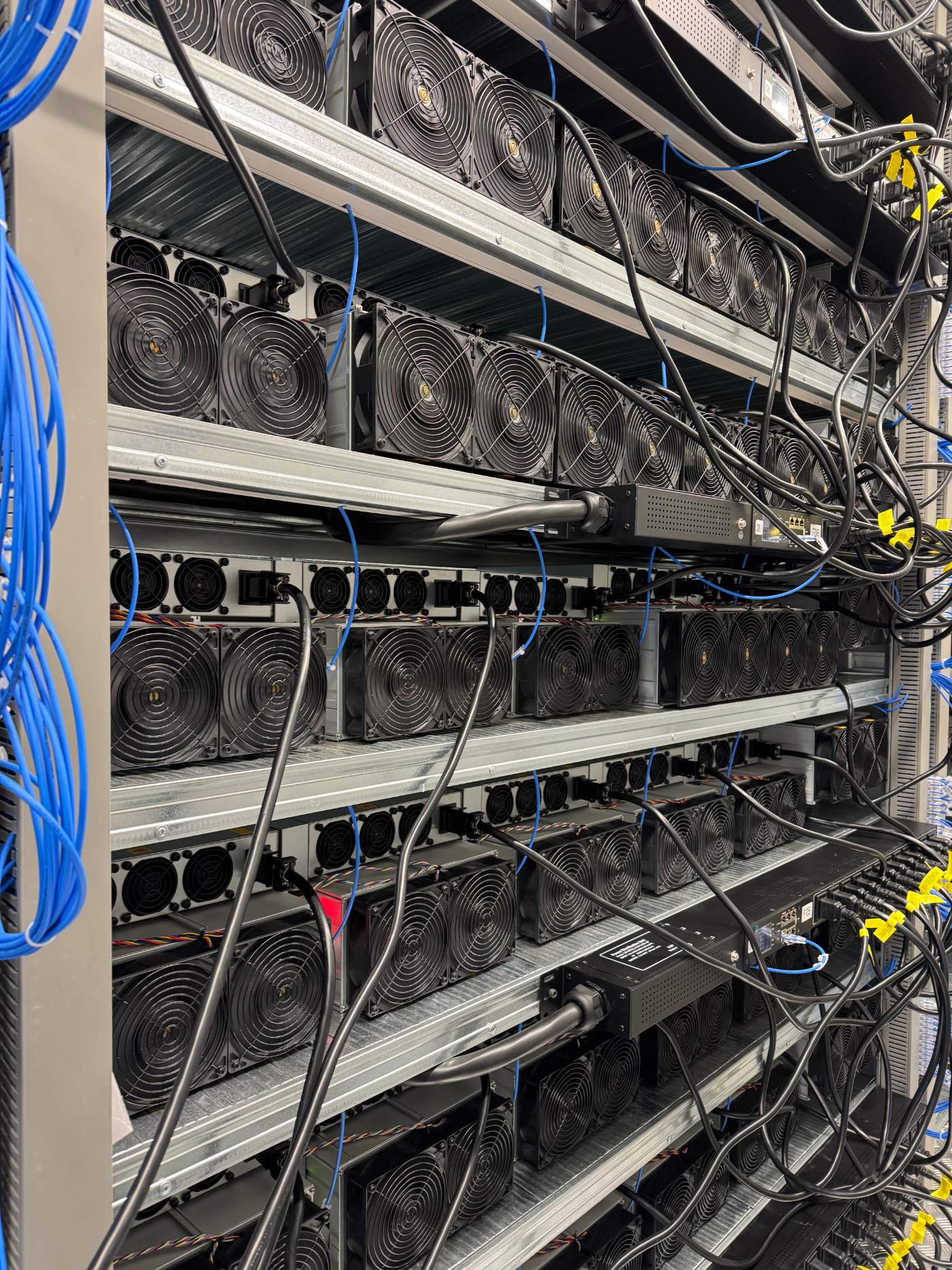
The full deployment path from order to stable operation, with the steps that decide whether the schedule holds and the ones that usually slip.
What happens between placing an order and watching a fleet run stably, and which of those steps quietly decides whether the whole schedule holds? Most of the plan is logistics. The part that slips is usually not logistics but power: energised capacity at the hosting slot, ready on the day the hardware lands.
Order and the paperwork that should exist before shipping does
The purchase order is the easy part. What decides how the rest of the timeline behaves is what gets confirmed alongside it: the hosting slot the fleet is destined for, the power capacity reserved against it, and who is responsible for each leg of transport. If the hosting side and the hardware side are being arranged separately, this is the point to line them up, because a fleet that ships before its hosting slot is confirmed is a fleet that lands with nowhere to go. Our hosting page covers what we take responsibility for once a slot is reserved, and what stays on the buyer's side of the line.
Get the delivery specification agreed in writing at this stage: how units are packaged, what documentation travels with the shipment, and who the consignee is at the destination. It is unexciting work, and it is the difference between a delivery that clears without incident and one that sits at a border waiting for a document nobody thought to send ahead.
Shipping and the handoff that is easy to lose track of
Once hardware is in transit, the useful discipline is knowing exactly where responsibility sits at each leg: with the seller until pickup, with the carrier in transit, and with the host from the point it signs for the delivery after count and inspection. A gap between those handoffs is where damage claims and delays become somebody's unresolved problem instead of a defined one.
If a broker or freight partner is involved, confirm who they report status to and how often, and get that agreed before the shipment leaves rather than after it goes quiet. A shipment that is simply slow is manageable. A shipment nobody can locate is not, and the difference is usually just whether tracking was set up properly at the start.
Receiving and inspection at the site
Delivery is not the same as receipt. Receiving means the site physically takes custody, counts what arrived against what was ordered, and inspects for shipping damage before anything is powered on. This step exists to create a record: if a unit arrived damaged, that needs to be documented at the dock, not discovered three weeks later when it fails to boot and nobody can say when the fault happened.
A serious receiving process logs serial numbers against the packing list, photographs any damage, and flags discrepancies immediately rather than holding them until a convenient moment. Ask how your host handles this step specifically, because it is the one most often compressed under schedule pressure, and it is also the one that protects you if something goes wrong in transit.
Racking, power up and the settling period into steady operation
Physical installation, cabling and initial power up are usually the fastest part of the whole process, precisely because they are the most mechanical. What takes longer, and matters more, is the period after a unit is powered where it is watched rather than assumed to be fine. New hardware occasionally reveals infant failures once run under real load and real thermals, and a site that checks for that before calling a unit commissioned is doing you a favour that is easy to overlook until you are on the other side of a fleet with a hidden fault.
This is also where the airflow design of the site earns or loses its reputation. A row that runs an even temperature spread from the first hours of operation is a good sign about everything upstream of it, not just about that one row.
Bringing a fleet to its running state usually involves settling firmware, pool configuration and monitoring so that what you see in a dashboard matches what is physically happening in the container. This is also the point at which responsibility formally shifts from "deployment" to "ongoing operation," and that handover should be explicit rather than assumed, with a clear record of what was checked and signed off before the fleet is treated as live.
At our facilities, this is the point where the customer dashboard starts showing the same power and temperature readings our team works from, so the numbers you are watching remotely match what the fleet is doing.
What to ask and lock down before you order
Work through these before hardware ships, not after:
- Confirm the hosting slot and reserved power capacity are locked in before you commit to a ship date.
- Get the delivery specification, consignee details and required documentation agreed in writing.
- Ask exactly how receiving and inspection works at the site, and whether damage is documented at the dock.
- Ask what the settling period looks like before a unit is called commissioned, and what is checked during it.
- Ask who signs off on the handover into steady operation, and what record that handover leaves behind.
Every step above is something you can ask about before you place an order, not after something has already gone wrong. If you want to talk through how this sequence would run for a specific fleet, our contact page is the place to start that conversation.