Warning signs a customer can see before an operator stops paying its power bill, and what to do with them while you still have options.
A host does not usually collapse on the day the power gets cut. By the time that happens, the underlying problem has often been running for months, visible in small ways to anyone hosting with them who was paying attention. Fleet owners rarely get a clean signal that something is wrong. What they get is a pattern, spread across invoices, emails and site reports, that only reads clearly in hindsight. The point of this piece is to make that pattern legible before it is history.
The usual causes, seen from inside
Three failure modes account for most of what goes wrong at a hosting operator, and none of them require fraud or bad faith to produce the same outcome.
The first is a power rate quoted too tight against the operator's actual cost. A contract signed to win volume, priced against wholesale power assumptions that do not survive a bad season, leaves no margin to absorb a spike. The operator keeps hosting because the alternative is admitting the number was wrong, and the gap gets carried rather than closed.
The second is concentration risk on the customer side. An operator with most of its capacity committed to one or two large fleet owners is exposed to whatever happens to those customers. A late payment from a dominant client does not stay that client's problem; it becomes a liquidity problem for the operator and, indirectly, for every other customer on site.
The third is building ahead of revenue. Expansion financed on the assumption that a new hall will fill quickly, before the financing or the customer contracts are in place, works fine until fill-out is slower than modelled. The gap between capital spent and capacity sold is where an operator's balance sheet gets stretched thinnest, and it is invisible from outside until the strain shows up somewhere else.
A single conversation with an operator reveals none of them. They show up over time, in behaviour, and that is the part a customer has access to.
What shows from outside
Payment behaviour is the clearest signal, but it is not the only one. Watch for power bills or supplier invoices that used to arrive settled on schedule and start slipping, even by a little, even with a plausible explanation each time. One late payment is an anecdote. A pattern of payments trending later, or excuses that change from month to month, is the underlying number moving in the wrong direction.
Communication changes second. Reports that used to arrive on a fixed schedule start arriving late, or start saying less than they used to. Questions that used to get a direct answer start getting a deflection or a promise to follow up that does not happen. An operator under pressure often goes quiet before it goes wrong, because there is less good news to report and less time to write the report at all.
Staff turnover is a third signal, and one customers tend to underweight. The account manager or site lead who suddenly is not the person you are dealing with anymore, replaced without explanation, is not automatically a bad sign, but a pattern of departures at an operator you deal with regularly should be asked about directly rather than assumed to be unrelated to anything financial.
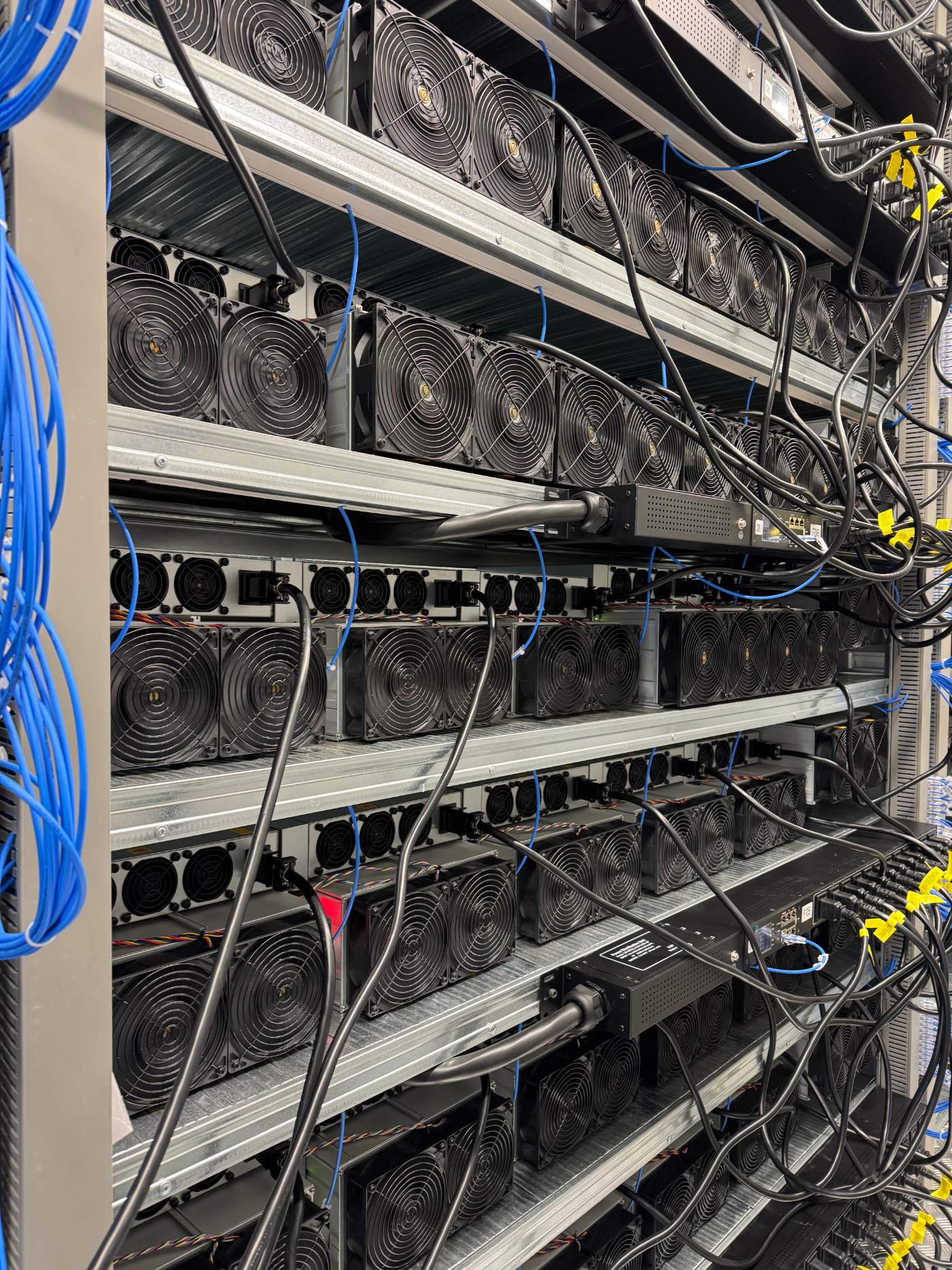
The physical site is a fourth. Deferred maintenance (on cooling, electrical work or general housekeeping) tends to show up before a company admits to cash pressure, because maintenance is one of the easier costs to postpone without an immediate consequence. A site that looked well kept a year ago and looks neglected now is sending a signal, even if nobody at the company is saying it out loud.
Questions that bring clarity early
Waiting for a definitive signal costs time you may not have once one arrives, so the useful move is asking direct questions before you have a firm reason to. Is the site's power contract fixed or variable, and if variable, what happens to your hosting rate if the underlying cost rises? How concentrated is the operator's customer base, and would they say if one large customer left?
Ask what the operator's own runway looks like if a major customer paid late for an extended period. A confident answer, with specifics, is itself informative. A vague answer, or one that treats the question as inappropriate, is informative in a different way.
And ask plainly whether the operator has missed a power payment in the recent past. Some will not answer that directly, which is itself useful to know, but a host that treats the question as a normal one to be asked is behaving differently from a host that treats it as an accusation.
What matters in the contract if it comes to that
Most hosting agreements are written assuming the relationship continues normally, and say comparatively little about what a customer can do if the operator's business runs into trouble. The clauses to find, before you need them rather than after, are the notice period for either side to exit, what security you hold and where it sits if the operator's own obligations lapse, and whether the contract gives you any claim on your own hardware if the operator becomes insolvent while your machines are still on site.
Our piece on deposits and prepayment goes through what a deposit is meant to protect against and what survives if the operator's business runs into trouble, and it is best read before signing rather than while trying to work out where your money sits during a dispute. The related question is what legal claim the operator itself might assert over your machines if invoices go unpaid on either side. We cover that in hardware liens explained.
What to do while you still have options
If two or more of the signals above are present at once, the response is not to panic and pull hardware immediately. It is to move from passive observation to active questions, in writing, and to start planning an exit even if you do not execute it yet. Ask for a written update on payment status with the site's power supplier. Ask what the plan is if a specific named risk materialises. Ask, directly, what the notice period is if you decide to relocate your fleet, and confirm that number against what the contract says rather than what you remember agreeing to.
Start identifying an alternative site before you need one. The worst time to look for hosting capacity is after the operator you are with has already stopped paying its bills, because that is also when every other customer on that site is looking for the same thing at once. A fleet owner who has already scoped a fallback loses nothing by never needing it, and loses a great deal by needing it and not having one.
None of the signals in this piece prove that a specific operator is in trouble on their own, and none should be read as an accusation against any host, ours included. They are a pattern to watch, not a verdict to reach from one data point. If something here reads uncomfortably close to a host you work with, the right next step is a direct conversation with them, not a conclusion reached in isolation. If that conversation does not go the way you hoped, the deposits piece linked above is the place to start working out what you hold. Our operations page sets out what we commit to and how each commitment is evidenced, the kind of written record to ask any host for.