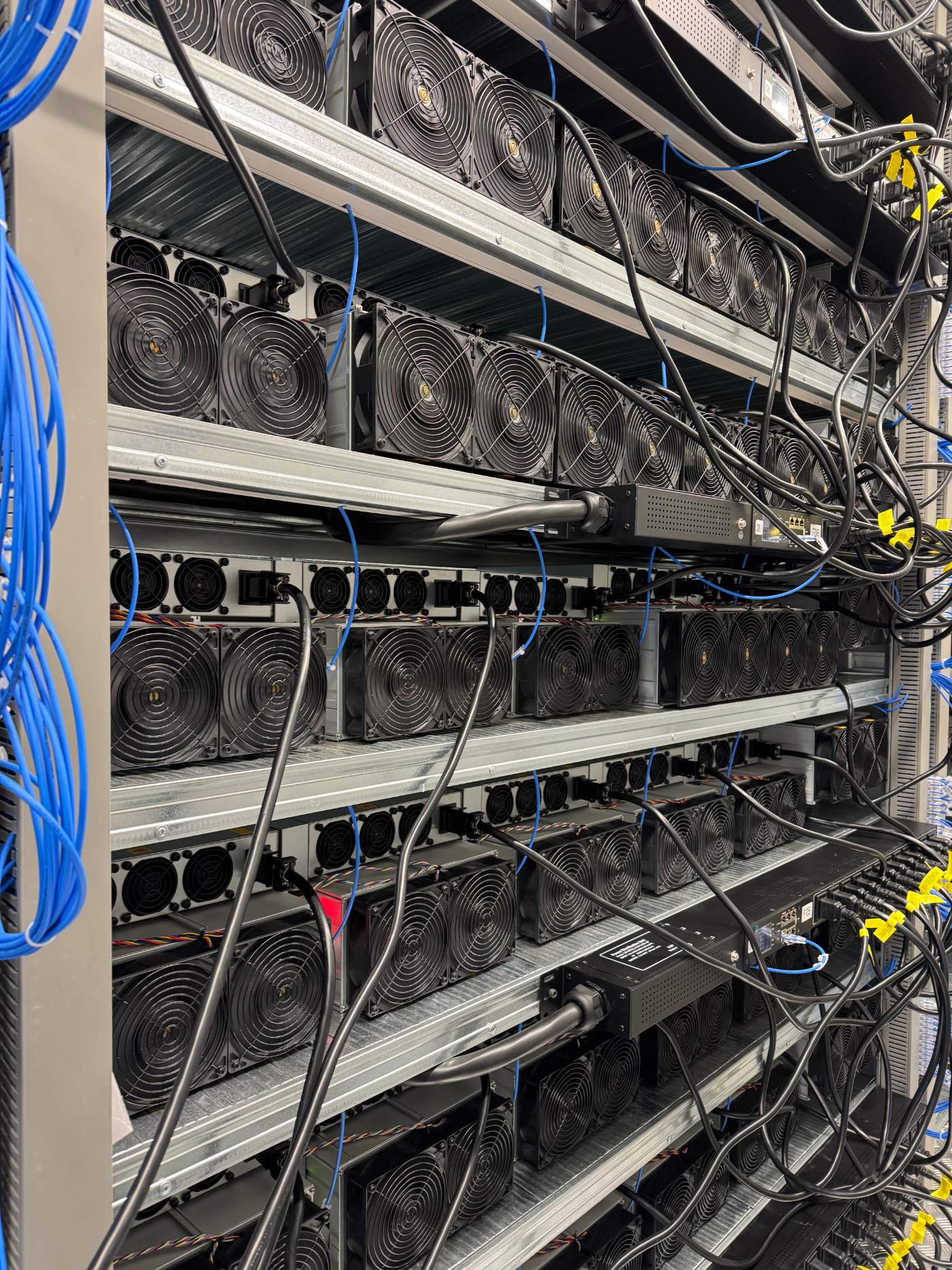
How availability is measured, why two hosts quoting 99 percent mean different things, and which definition you want in your agreement.
Ninety-nine percent appears in almost every hosting proposal. In one, it means 99 percent of your machines, measured at the wall, every month, with a credit if the host misses it. In another, it means 99 percent of the site's transformer capacity, measured over a year, with nothing owed if they fall short. Both sentences fit on the same line of a sales deck. They are not the same commitment, and you cannot tell which one you are getting until you ask what the percentage is a percentage of.
Two terms need keeping apart from the start. Availability is what the host delivers: the share of the period in which contracted power and cooling were in place for your hardware at the agreed measurement point. Uptime is what your machines ran: the share of the period in which they were hashing, which also depends on firmware, pool configuration and the condition of the hardware. A host can deliver full availability while your uptime falls short, which is why a host's commitment normally covers availability and your own monitoring tracks uptime.
Availability of what, exactly
Start with the denominator. Availability can be stated for the site (grid connection and substation up), the facility power train (transformers and switchgear delivering to the floor) or the device (power reaching each unit's position). A site can be fully available while a rack is down on a tripped breaker, and a host quoting site-level availability is not misstating anything when your machines are offline. Ask the host to name the level the number describes, in the agreement, not in conversation. If the document says "availability" without saying availability of what, you have a marketing word standing in for a defined term.
The next question is where the clock is reading from. Power measured at the utility meter, at the transformer, and at the individual PDU can all show different numbers during the same incident, because each point sits behind different equipment that can fail independently. A host that measures at the meter and reports full availability can still have a downed PDU on your row. Ask which point the reported figure comes from, and ask whether you can see the same reading yourself, live, rather than in a monthly summary the host compiles.
This matters more than it sounds, because the measurement point often decides who bears a fault. A break between the meter and your PDU sits inside the host's infrastructure, and if the reported number is taken upstream of that break, it never shows a gap at all. The agreement should say which side of which piece of equipment the reading is taken from, not just that the site is monitored.
What gets excluded before the number is calculated
Every availability figure has exclusions, and the exclusions are where the real commitment lives. Planned maintenance with advance notice is a normal exclusion; the question is how much notice and how often. Force majeure is a normal exclusion; the question is how narrowly it is defined and whether the host can invoke it unilaterally. Curtailment called by the grid operator or the power supplier is a separate matter from availability and deserves its own clause, but agreements sometimes fold curtailed hours quietly into an "excluded" bucket so they never touch the availability figure at all. Read the exclusion list line by line. A short list you can quote back to the host is a better sign than a long list you would need a lawyer to parse.
Over what period the number is calculated
An annual average absorbs a bad month. A host that had two weeks of real trouble in March can still report 99 percent for the year, because the other eleven months were close to perfect. If your revenue depends on those two weeks in March, the annual figure told you something true and something useless at the same time. Ask whether the agreement measures monthly, quarterly or annually, and ask what happens to a bad month inside a good year: does it get reported on its own, or does it disappear into the average before you ever see it?
Put two quotes side by side and the point becomes concrete. A host quoting 99 percent measured at the site, averaged annually, with planned maintenance and force majeure excluded, is making a fairly loose promise: most of the ways a fleet loses hours never touch that figure. A host quoting the same 99 percent measured per device, averaged monthly, with a narrow exclusion list, is making a tighter one, because more of what can go wrong on your row would show up as a miss. Neither host is being dishonest by quoting 99 percent. They are answering different questions with the same-looking number, and the agreement is the only place that says which question was answered.
What happens when the number is missed
This is the clause that turns a number into a commitment. Three outcomes are common, and they are not equivalent. A service credit against future fees costs the host money and gives you something concrete. A right to terminate without penalty costs the host a customer and gives you an exit. A number with no stated consequence is a description of what the host expects to happen, not an obligation. If the agreement states an availability figure and stops there, ask directly what you are owed if the site misses it, and get the answer added to the document rather than left as something you were told on a call.
What to ask before you sign
Before you compare two offers on their headline percentage, get five things in writing for each: the level the number applies to (site, power train or device), the measurement point, the full exclusion list, the averaging period, and the remedy for a miss. Two hosts with the same headline number can differ on all five, and the difference is worth more than the extra tenth of a percentage point one of them is advertising. If a host will not put these five things in the agreement itself, that reluctance is itself an answer, to weigh alongside the other clauses covered in our hosting agreement checklist.
None of this is about finding the highest number. It is about knowing what the number would owe you if it turned out to be wrong. Our operations page sets out what we commit to and how each commitment is evidenced, including the customer dashboard and the monthly written report.