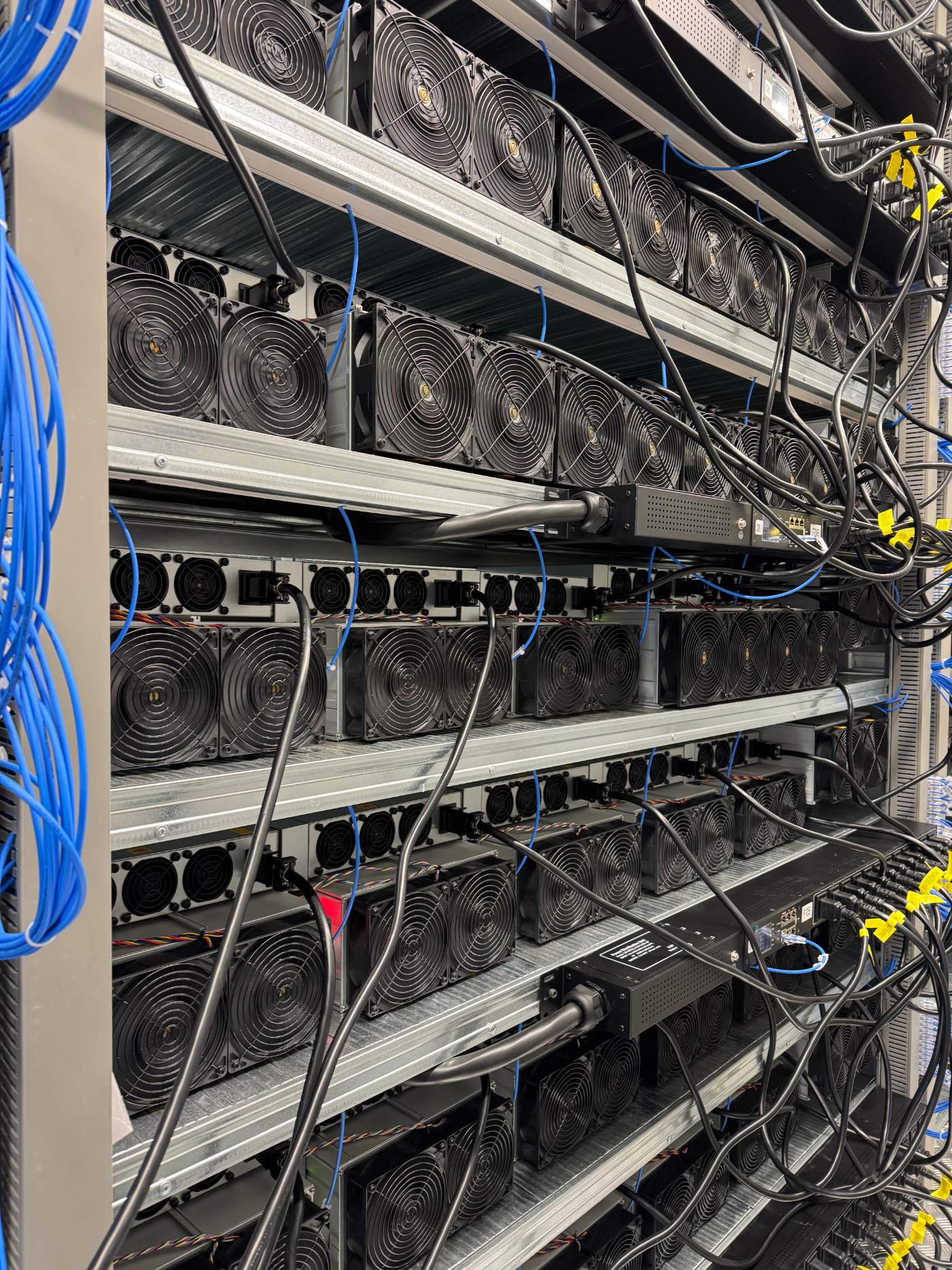
Turnaround times, who pays, and what is worth stocking on site. The part of hosting that decides how much of your fleet is earning next month.
A hashboard fails on a Tuesday, and the question that matters is not that it failed but how long the unit sits idle before it is earning again. That gap, from failure to back online, is decided almost entirely by decisions made long before the fault: what the host repairs on site, what has to go back to a repair centre, whether a spare part is sitting in the building, and who is paying for it. This is what shapes that gap and what to ask about it.
On-site repair versus sending a unit back
Most faults in an ASIC fleet fall into one of two categories: things a competent host can diagnose and fix at the rack, and things that need to leave the building. A loose connector, a failed fan, a power supply swap, these are on-site repairs when the host stocks the part and has someone trained to do the work, and they can be turned around within a shift rather than a shipping cycle. A cracked hashboard, a control board fault that needs specialist diagnostic equipment, or a repair that requires tooling the site does not carry, has to go back to a repair centre or the manufacturer, and that is a different timeline entirely, measured in the transit and queue time of whoever receives it rather than in the time it takes to open a case.
Ask about the distinction directly, because it changes what a delay means. A unit waiting on an on-site part is a stocking problem, and the host controls the fix. A unit sitting in transit or in a repair centre's queue is largely out of the host's hands once it has left, and the host's only real lever at that point is how well they chose a repair partner and how actively they chase the case.
What a competent host repairs on site, and what it does not
A host that repairs at the rack, rather than sending everything back, is one that has invested in the diagnostic equipment, the trained hands and the parts inventory to do it. Confirm that directly rather than assuming it: ask what proportion of faults the site resolves without the unit leaving the building, and ask to see the workshop rather than being told it exists.
What does not belong on site is anything that needs a level of diagnostic equipment or manufacturer-level access that only a dedicated repair centre carries. A host that claims to fix everything in house, including faults that genuinely need that equipment, deserves harder questions rather than reassurance.
Warranty, and its limits once hardware has been running
Warranty cover looks straightforward on paper and gets complicated fast once a unit has been running in production for a while. Manufacturer warranty on new hardware typically covers a defined period from shipment, and it usually excludes damage from causes outside normal operation, which is a broader category than it sounds, covering things like documented environmental excursions or handling damage as much as obvious misuse. Whether a claim is accepted often comes down to whether the failure can be tied to a manufacturing defect versus ordinary wear, and that determination is made by the manufacturer or repair centre, not by the host, which is another reason the host's relationship with that repair centre matters.
For hardware bought used, or for a fleet that has already run past whatever cover it had, the practical warranty is whatever the host's repair capability and parts stock can provide, not a manufacturer's promise. Ask what happens to a failed unit once the manufacturer's cover has lapsed: whether it becomes a paid repair, a parts swap billed at cost, or a unit that gets pulled and held for a later decision. Getting that answer before a fault happens is worth far more than getting it after. At our facilities, warranty handling with the manufacturer stays with you; our team provides the diagnostics and the hands on site.
Spare parts: what to stock, and who pays for it
Spares stocking is where the economics of repair turnaround live. A power supply or a fan sitting in a bin on site turns a multi-day repair into a same-day one, and the cost of holding that inventory is small compared to the earnings a unit loses sitting idle while a part is ordered in. Hashboards and control boards are a harder call, since they are more expensive to hold as inventory and more specific to a given model, so a host's decision about what to stock, and in what quantity, says something about how they weigh idle time against inventory cost for the fleets they run.
Who pays for a spare part, and under what circumstances, is a separate question from whether the site holds one at all. Some hosts include common consumables and swaps in the hosting rate, treating them as a cost of keeping the fleet earning. Others bill the part at cost, or at cost plus a margin, with the labour to fit it billed separately. Neither approach is wrong, but the answer changes what a repair costs you, so get it agreed before a fault happens rather than reading it off an invoice for the first time.
Priority, billing and the numbers to ask for
A site hosting multiple clients has to decide, implicitly or explicitly, whose unit gets fixed first when several fail in the same window. Some hosts work strictly on a first-in, first-out basis regardless of client. Others prioritise by contract terms, by the size of the fleet affected, or by whether a unit sits under an active service-level commitment. There is no single right answer to this, but there is a wrong one: not knowing which basis your host uses until a busy week makes it matter.
On billing and proof of work, ask for documentation of what was done to a unit, not just a line item on an invoice: what was diagnosed, what was replaced, and when the unit went back into service. That record is what lets you check a repair invoice against reality, and it is also the raw material for the kind of failure tracking covered in our piece on failure statistics and baselines, since a repair log tied to a unit is what turns a pile of invoices into a usable history.
Before you sign with a host, or before you accept the status quo with one you are already using, ask for a straight answer on the following:
- What share of faults are repaired on site, and what has to be sent out?
- What parts are stocked on site, in what quantity, for the hardware you are running?
- What happens to a repair once manufacturer warranty has lapsed, and who decides?
- How is repair priority set when several clients have failures in the same window?
- Can you get a per-unit repair record, not just a summarised invoice?
The answers tell you more about how much of your fleet is earning in a given week than almost any other question you could ask a host. Our hosting page sets out the scope we cover, from remote hands for reboots, swaps and diagnostics to intake and decommissioning, and our hardware page lists the model families we host. Check both against the questions above before you commit to a host or review the terms you already have.