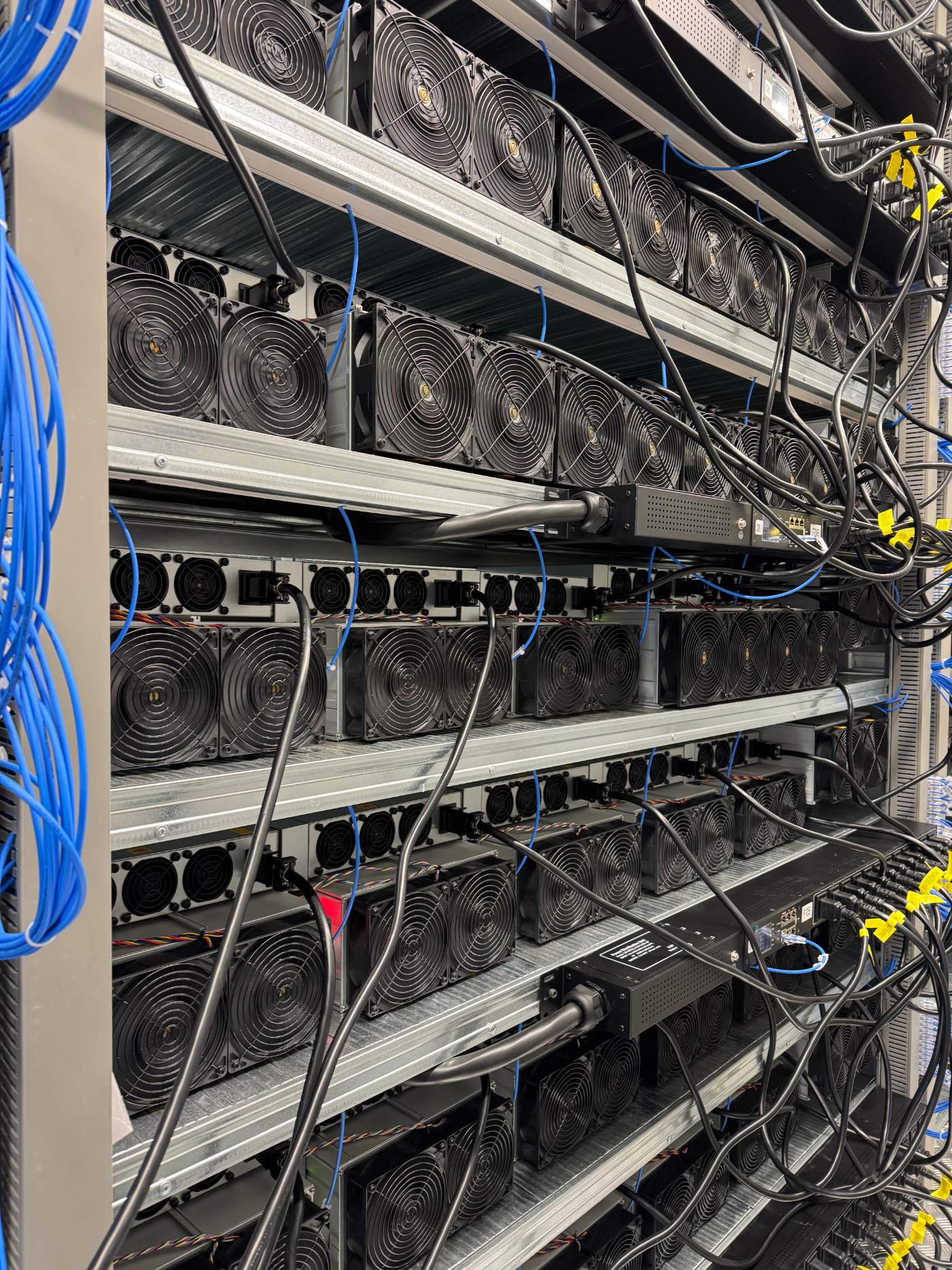
How tuning changes the arithmetic between power cost and revenue, when it pays, and what it means for warranty, heat and your hosting contract.
Every unit on your rack ships with a stock operating point the manufacturer chose to sell hardware, not to maximise your margin at your hosting rate. Pushing that point down, so the machine draws less and produces less hashrate, sounds like giving something up. Whether it reduces your return depends on arithmetic that has nothing to do with intuition about speed, and the arithmetic runs differently at every site and every rate.
The relationship you are tuning
A unit's power draw, its hashrate and its efficiency are not three independent numbers you can move on their own. Draw and hashrate both fall when you underclock, but they rarely fall by the same proportion, and that gap is the entire point of the exercise. Silicon has an operating range where a reduction in draw costs a proportionally smaller reduction in output, so each terahash takes fewer joules, because power consumption in a chip does not scale linearly with the work it does. Heat output simply falls with the draw, since every watt drawn ends up as heat, so the gain from tuning down shows up in joules per terahash rather than in heat. Pushed the other way, past the stock point, the relationship inverts: a small gain in hashrate starts costing a disproportionate amount of extra power. Underclocking is an attempt to sit on the favourable side of that curve rather than the stock point a manufacturer chose as a general-purpose default.
This is not a fixed rule you can apply once and carry to the next generation of hardware. Where the favourable side of the curve sits, and how wide it is, differs by chip design and by the specific unit in front of you, which is why the only reliable way to find it is testing your own fleet at your own site rather than importing a setting someone quoted from a different deployment.
When a slower setting earns more
The decision to underclock is a comparison between two numbers: what the change saves on your power bill, and what it costs in reduced hashrate against current revenue per unit of hashrate. When your hosting rate sits close to what your hardware's revenue can cover, a reduction in draw that outpaces the accompanying drop in output improves the margin on every unit running that profile. When your hosting rate sits comfortably below that threshold, the same change trades away hashrate you were already earning a healthy return on, for a power saving you did not need. The question is not whether underclocking works. It is whether your current position on the revenue-to-cost comparison is the position where it helps, and that position moves as hashprice moves, which means a profile that made sense last quarter should be checked again rather than assumed to still be correct, using current figures for both sides of the comparison rather than the ones you tested against when you first set the profile.
What changes in the rack once you tune down
A lower draw setting is also a lower heat setting, and that has effects beyond the revenue line. Fans typically spin down with reduced heat output, which can extend their working life and reduce the noise and dust load a site's filtration has to handle. Components running cooler tend to see fewer heat-related failures over time, though "fewer" is a direction, not a guarantee, and no tuning profile removes wear entirely. The effect runs in both directions: a profile pushed above stock does the opposite on every one of these fronts, and a rack sharing airflow with units tuned that way carries some of that cost even on the machines left at stock settings. If you are underclocking specifically to manage heat rather than to chase a revenue threshold, say so to your host, because the reason changes what else to discuss at the same time, such as whether nearby units are running above stock and offsetting the benefit.
Warranty, responsibility and who is allowed to change the setting
A tuning change is a change to how the manufacturer's hardware is operated, and manufacturer warranty terms do not always treat underclocking and overclocking the same way, so the assumption that running slower is automatically safe for warranty purposes should be checked rather than taken on faith. Separately from the manufacturer's position, your hosting agreement should say plainly who is allowed to change tuning settings on your fleet: you alone, the host alone, or either party within some agreed range, and what happens if a change made by one side affects an outcome the other side is responsible for, such as a power draw commitment or a heat load the site's cooling was sized against. Firmware and tuning access is exactly the kind of remote control a hosting relationship has to define explicitly rather than leave implicit, which our piece on firmware, pools and change control covers in more detail. Billing is the other piece to confirm before you tune anything: if your site bills against metered consumption, a lower draw setting should show up directly as a lower bill for the period it runs, so check that your invoice reflects it rather than assuming it does.
What to work out before you change a setting
Before you push a tuning profile to production, work through it in this order. Test the specific reduction in draw and hashrate your hardware produces at a candidate setting, rather than relying on a figure quoted for a different unit or a different firmware version. Compare that reduction against your current hosting rate and current hashprice, using the threshold arithmetic described above, to confirm the change sits on the side that helps rather than the side that costs you hashrate you did not need to give up. Confirm who is allowed to make the change under your agreement, and whether it needs advance notice to your host given the effect on heat and draw at rack level. Ask your host whether metered billing will reflect the new draw figure directly, and over what period. And check with the manufacturer, or your reseller, whether the specific change you are planning affects warranty coverage before you apply it fleet-wide rather than after. At our facilities, pool and worker configuration stay with you; underclocking, overclocking and firmware changes follow the procedure in the service agreement and need written approval.
You do not need to guess where hashprice goes next or predict how your hardware ages. What it takes is running the comparison once, keeping it current as your rate or the market changes, and having an agreement that says clearly who can turn the dial and how the resulting draw gets billed. Our piece on nameplate versus actual draw goes through how metered billing reflects a change like this once it reaches the meter, and the model families we host, with how each is cooled, are listed on our hardware page.