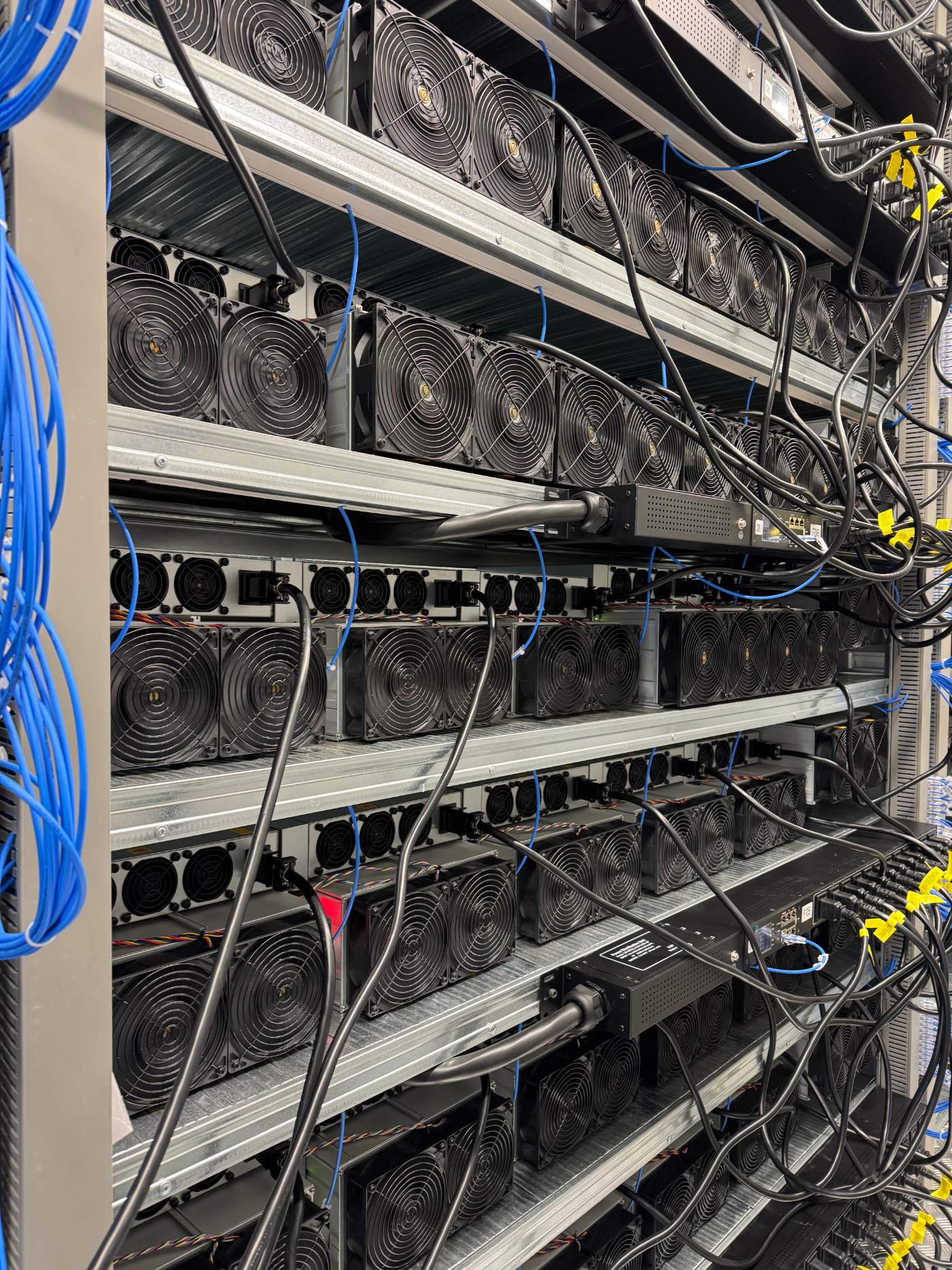
Every cost line on the build side and the host side, including the ones first estimates leave out, so you can price both routes with your own quotes.
Every fleet owner weighing a purpose-built site against a hosting agreement ends up asking the same question in different words: is it cheaper to own the walls or to rent capacity by the megawatt? The answer is not a single number but two lists of costs, one for building and one for hosting, priced against your own quotes and set side by side. Most of the disagreement between people who favour one route or the other comes down to which items ended up on which list, and how many of them were left off the build side entirely.
What sits on the build side of the ledger
A self-built site carries more line items than the headline construction figure suggests. At minimum, the list includes:
- Land or lease acquisition, and the diligence to confirm it can carry the load you intend
- The grid connection itself, from application through to energised capacity, not just the physical drop
- Construction of the building, electrical infrastructure and cooling system
- Equipment: switchgear, transformers, racking, containment, monitoring hardware
- Staffing to run the site day to day, not only during commissioning
- A spare parts inventory sized for the failure modes your hardware actually has
- Insurance covering the facility, the equipment inside it and the liability of running it
- Ongoing administration: permits, compliance filings, utility account management, and the general overhead of being the entity of record for a piece of industrial infrastructure
Every one of those is a real cost whether or not it shows up in the first estimate someone hands you.
What sits on the host side
A hosting agreement collapses most of that list into a single rate, usually per kilowatt hour. What you are buying is capacity that already exists, with the grid connection, the building and the operating staff already in place and already amortised across other customers as well as you. The comparison to make is not the build total against the hosting rate as printed, but the build total against the hosting rate plus whatever the agreement layers on top of it: a deposit, a minimum term, and the notice period that governs how easily you can leave. Our hosting rate page explains how a rate per kilowatt hour is built and what sits inside the base rate, which is the starting point for pricing the host side of your own comparison.
What building leaves out on first pass
The items that go missing from a first build estimate tend to be the same ones every time. Interconnection queue position and the lead time attached to it are usually treated as a formality rather than a cost, when in practice the wait for energised capacity can be the single largest source of delay in the whole project; our piece on grid connection steps and lead times walks through what that process involves. Contingency for change orders during construction is another: a build budget without a meaningful contingency line is a budget that has not yet met its first change order. Spare equipment held in reserve rather than installed, the staffing needed for monitoring outside normal hours, and the administrative cost of being your own permit holder and utility account manager all tend to arrive as surprises rather than line items, because none of them show up on a construction quote.
Time to production, and the risk on each side
A hosting contract, once signed and capacity is available, can usually put hardware to work within a short window. A build has to clear land work, construction, connection and commissioning before a single unit produces anything, and every week in that sequence is a week of capital sitting idle rather than earning. That gap deserves to be priced as its own line item in the comparison, not folded into a vague sense that building takes longer. The way to price it is straightforward even without a fixed timeline in hand: take the hardware and capital committed to the build, and ask what that capital would otherwise be earning, for however long the build realistically runs before first production. Our piece on site selection covers the diligence that determines how long that runway is for a given plot, which feeds directly into this number.
The two paths also carry different kinds of risk, and the cheaper route on paper is not automatically the lower-risk one. A hosting agreement gives you an exit: a notice period, a minimum term that eventually lapses, and a counterparty whose problem it becomes to keep the site running. A self-built site gives you an asset, which is worth something when conditions are favourable and becomes a liability you have to sell, repurpose or write down when they are not. Neither position is automatically better. What matters is whether you have priced the option value of being able to leave against the value of owning something that keeps working for you after a hosting contract would have ended.
How to run the comparison for your own case
Build two lists using the categories above, and price every line with a quote specific to your situation rather than an industry rule of thumb, since land, connection costs and construction pricing vary enough by site that a borrowed number will mislead you in either direction. Add the time-to-first-production gap as its own priced line on the build side, and add the deposit, minimum term and notice period as their own priced lines on the host side. Then ask, for each line you are tempted to skip: what would happen to this comparison if that cost turned out to be double what you assumed? A build side that survives that question is one you can commit to with some confidence. A host side you are considering deserves the same scrutiny: ask directly what is included in the quoted rate and what is not, and get the notice period and minimum term in writing before you compare it against anything else.
A blank sheet keeps both sides on one page. Fill in each line with your own quotes, build figure first and host figure second, and write a zero rather than leaving a line out:
- Land or lease, with diligence: build ______ / host ______
- Grid connection to energised capacity: build ______ / host ______
- Building, electrical infrastructure and cooling: build ______ / host ______
- Switchgear, transformers, racking and monitoring hardware: build ______ / host ______
- Power at your expected draw, as energy and network charges or as the hosting rate: build ______ / host ______
- Staffing around the clock: build ______ / host ______
- Spare parts inventory: build ______ / host ______
- Insurance: build ______ / host ______
- Permits, compliance and administration: build ______ / host ______
- Contingency for change orders: build ______ / host ______
- Capital idle until first production: build ______ / host ______
- Deposit or prepayment: build ______ / host ______
- Minimum term and notice period, priced: build ______ / host ______
- Total over your planning period: build ______ / host ______
Neither path is right in general, and the answer changes with the specific site, the specific hardware and the specific timeline you are working against. What holds constant is that the comparison is only useful once both lists are complete. Our hosting page sets out the scope we cover, which is where to start listing the host side of that comparison against a real offer rather than an assumed one.