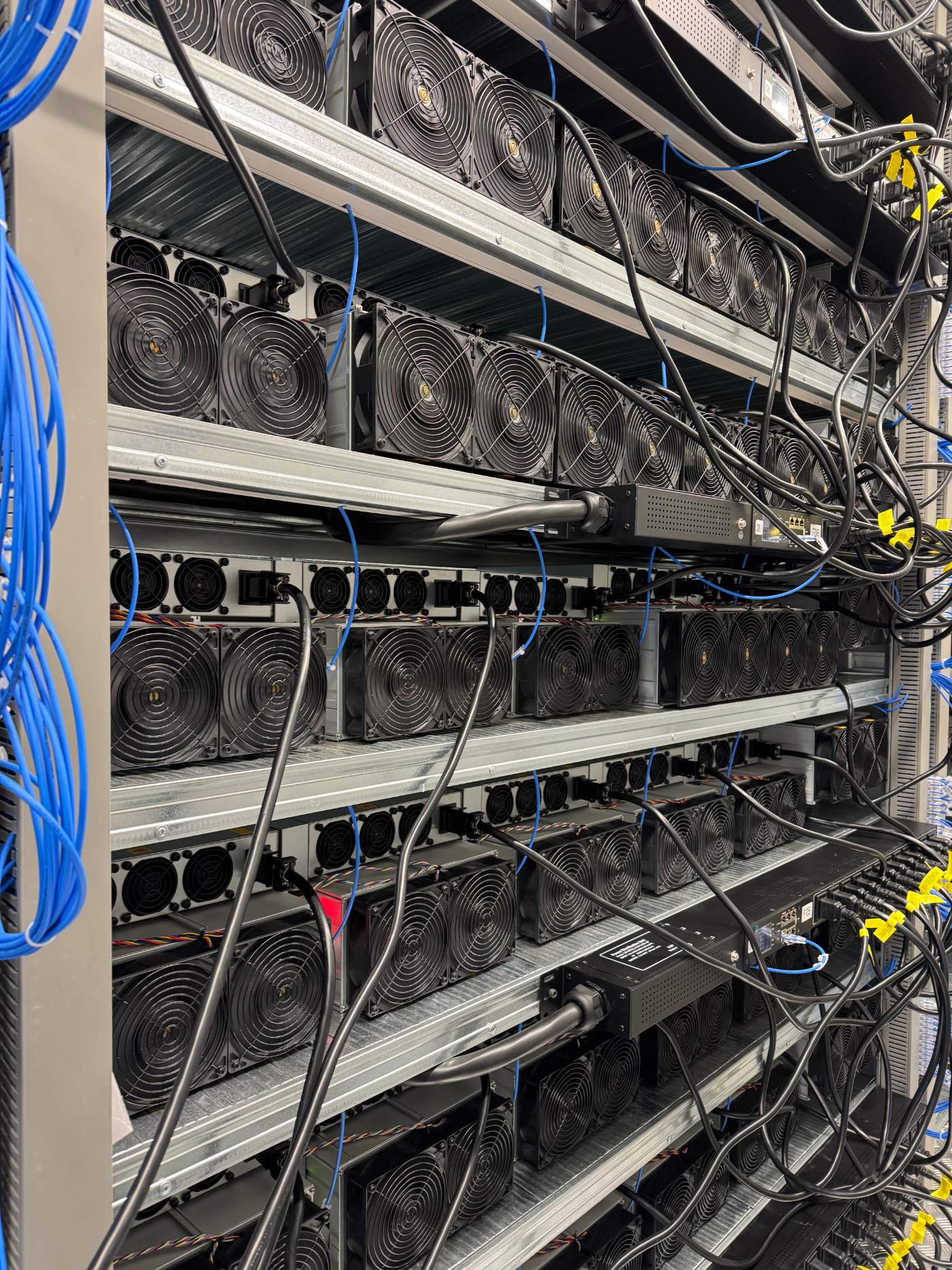
Regulation, climate, grid stability and how they trade against each other once the price per kilowatt hour stops being the only question.
For a fleet owner comparing regions, the first criterion is almost always the price per kilowatt hour, and on its own it is almost always an incomplete one. Rate matters, but a low headline rate attached to a site that gets curtailed at short notice, sits in a jurisdiction that changes the rules mid-agreement, or takes a week to reach when something goes wrong is not the cheap option once you account for what it costs you in practice. The comparison to make is not one number against another number. It is a set of criteria, weighed against each other, with price as one input rather than the whole answer.
Why the headline rate is the weakest starting point
A quoted rate tells you what a unit of energy costs today, under current conditions, at the specific site you asked about. It tells you nothing about whether that rate is stable, whether it survives a change in local energy policy, or whether the capacity behind it can be delivered when your fleet needs it rather than curtailed on the grid operator's schedule. Two sites quoting the same rate can be entirely different investments once you factor in how likely that rate is to hold and how much notice you would get before it changed. Rate comparison still has its place, but it belongs at the end of the process, applied to a shortlist of regions that have already cleared the other criteria, not at the start where it screens out options before you know what else is different between them.
Regulatory stability, and how to check it
The question is not whether a jurisdiction currently permits the kind of load you run, but how that position has moved over time and what mechanism would change it again. Look at whether energy and mining-specific policy in the region has shifted materially in recent years, and if it has, whether the shift came with notice and a transition period or arrived abruptly. Ask what body sets the rules that matter to you (a national regulator, a state or provincial one, or the grid operator itself) and how much discretion that body has to change terms for existing operators rather than only new ones. A region with a long track record of stable treatment for industrial power users is a different bet from one where the current favourable position is recent and could plausibly reverse. This is diligence you can do before you ever visit a site, and it belongs at the top of the list because it is the criterion most likely to make every other number in the comparison irrelevant if it goes the wrong way.
Climate and grid behaviour together
Climate sets the cooling budget for a site before a single rack goes in, and it should be treated as a cost driver rather than a footnote. A region with a high average ambient temperature and long stretches above it pushes a site towards more capable, more expensive cooling infrastructure, or towards a lower achievable density if the cooling approach stays simple. A cooler climate, or one with a wide daily or seasonal swing, gives a site more room to run air-cooled infrastructure further before it needs to change approach. Humidity matters alongside temperature, since it affects both cooling method and the maintenance burden on filters and electronics.
A region's grid can be reliable in the sense of rarely losing power entirely and still be unreliable in the sense that matters most to a hosted fleet: how often, and on what notice, load like yours gets curtailed. Ask what the region's curtailment history looks like for large industrial loads specifically, not for the grid as a whole, since residential reliability figures tell you little about how a demand-response or interruptible arrangement behaves in practice. Ask how curtailment events are communicated, how much notice operators get, and whether the arrangement is voluntary with compensation or can be imposed. Our piece on site selection goes through grid-side diligence in more detail, and grid behaviour is one of the areas where a site visit and direct questions to the local operator tell you more than any published statistic.
Reachability and tax treatment, the overhead that gets skipped
A site you can reach, staff and support in your own working hours is operationally different from one on the other side of the clock from your team, even when every technical spec is identical. Consider how far the site is from wherever your operations or technical staff are based, what the time zone overlap looks like for routine communication, and how quickly someone can physically get to the site if something needs hands rather than a phone call. A marginal issue that would be a same-day fix nearby can become a multi-day one across a large time difference and a long flight, and that gap has a real operating cost even though it never appears on a rate sheet. With a host, the reach that matters is the host's: on-site staff around the clock.
Energy cost and tax treatment are two separate questions that get collapsed into one far too often. A jurisdiction's approach to taxing industrial power consumption, equipment imports, or the business itself can move the effective cost of operating there by a meaningful amount even when the quoted energy rate looks identical to a competing region. Ask specifically what taxes and levies apply to the load, the equipment and the entity operating it, and whether any of those are scheduled to change. Treat this as its own line in the comparison rather than folding it into the energy rate, since the two move independently and a region can be attractive on one and unremarkable on the other.
Building your own comparison grid
Once you have gathered answers on each of these fronts for the regions you are considering, the useful next step is a grid: one row per region, one column per criterion, with your own notes on regulatory track record, climate and cooling implications, curtailment history, reachability and tax treatment sitting next to the rate itself rather than in place of it. Weight the criteria according to what matters for your operation, since a fleet that tolerates curtailment well should weight that column differently from one that cannot. Fill it in with answers you have verified directly, from a regulator, an operator or a site visit, rather than a summary someone else produced, and treat any criterion you cannot get a straight answer on as a gap to investigate before you commit rather than a box you leave blank.
Price per kilowatt hour will always be part of the conversation, and it should be, but it answers only one row of a much longer grid. Regions that hold up under this kind of comparison deserve a closer look, and the ones that do not are better ruled out before a site visit than after one. Once you have a shortlist, our piece on the build versus host decision is the natural next step, since the two comparisons feed into each other, and our operations page sets out the specification every one of our facilities follows for power, cooling, network and access.