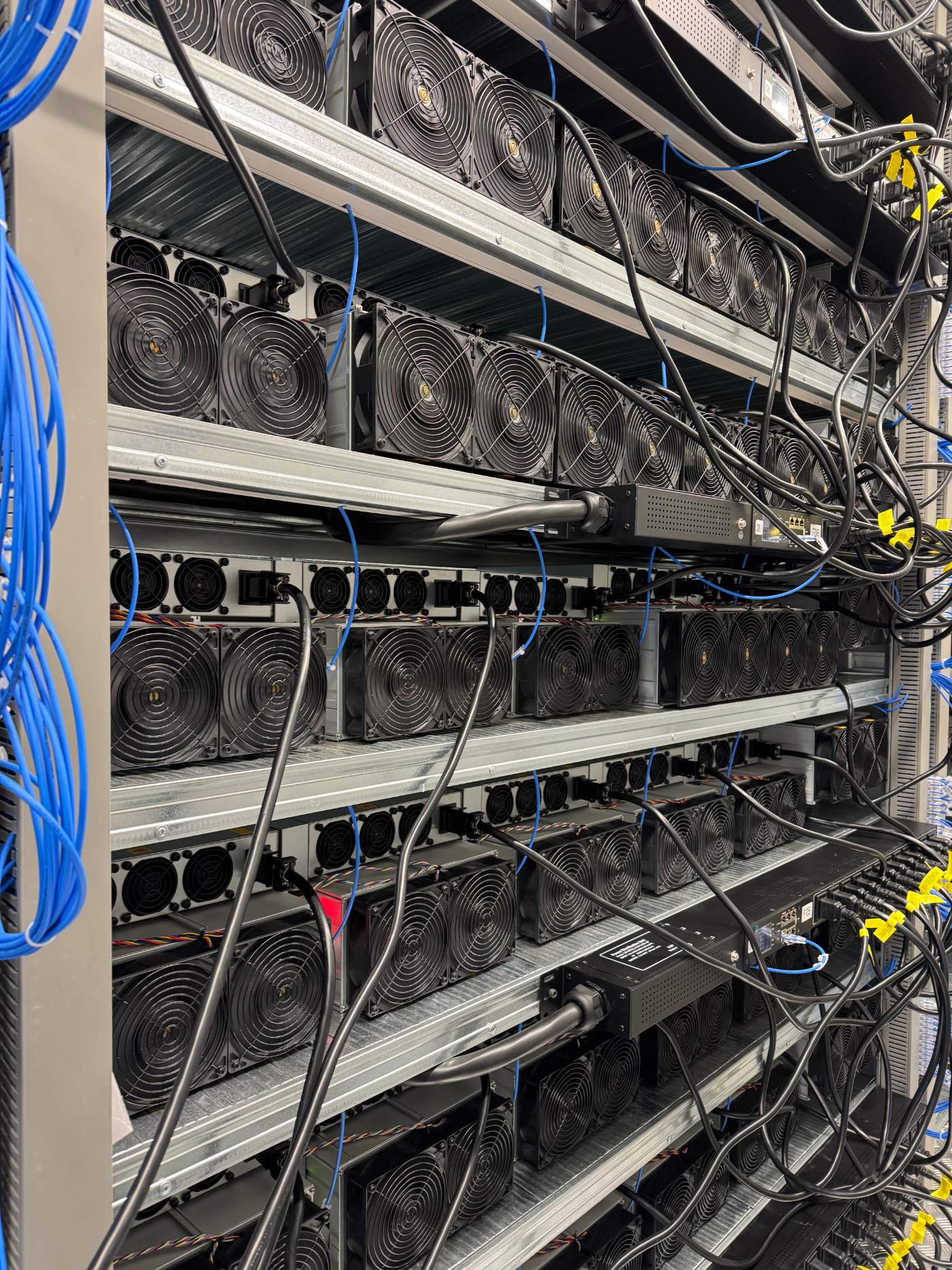
Air-cooled container hosting lives or dies on the path the air takes. What recirculation costs you, and what to look for when you visit a site.
In an air-cooled container the cooling system is the building. There is no chiller to hide behind and no raised floor to fix a bad layout. What you have is a volume of air, a pressure difference, and whatever the person who designed the container decided about where the air goes.
That decision shows up later as a temperature spread across your fleet, and a temperature spread shows up as chips that throttle, boards that fail early, and a hashrate curve that sags in the afternoon.
The failure mode is recirculation
The single most common problem is hot air finding its way back to an intake. It happens through gaps between units, around the edges of a rack, over the top of a partition, or through an unsealed cable pass. Each path is small. Together they mean a machine at the end of a row breathes air several degrees warmer than the machine at the start, while both are reported as running in the same container.
Recirculation is cheap to prevent at build time and expensive to fix later, because fixing it usually means taking the row down.
Delta T is the number to ask about
Ask an operator for the temperature difference between intake and exhaust under load, and for the spread across positions within one container on a warm day. Two numbers, both easy to measure, both rarely volunteered.
A tight spread means the airflow path is doing what it was designed to do. A wide spread means some of your machines are subsidising the others, and you will see it in the failure statistics long before you see it in a report.
Ambient is not the whole story
Cold climates help, and they are not a plan on their own. What matters is the worst week of the year, not the annual average. A site that runs comfortably for eleven months and throttles through a summer heat event has a capacity number that only applies to eleven months.
Ask what happens on the hottest day recorded at the site, what the fans do, and whether the operator derates or lets the machines self-throttle. The answers describe how the site is run.
Density has a ceiling you cannot buy your way past
Every air-cooled layout has a point where adding another machine does not add output, because the extra heat pushes the row into throttling. The ceiling depends on the airflow design, not on how much power is available at the wall. An operator who quotes density without stating the assumed intake temperature is quoting a best case.
Immersion and direct liquid cooling move the ceiling, at the cost of a different set of operational problems. For most ASIC deployments today, air remains the pragmatic answer, and the difference between a good air site and a poor one is layout discipline rather than technology.
What to look at when you visit
- Whether the gaps between units and around row ends are sealed.
- Where the exhaust goes, and whether it can reach an intake in any wind direction.
- Filter condition, and how often filters are changed.
- Whether there are temperature sensors at more than one point per container.
- What the fan control does when a machine is removed for service.
None of that requires instrumentation you have to bring. It requires walking the row and looking, which is a good reason to visit before signing.
Our hosting page covers what we handle on the infrastructure side, and the operations page sets out our cooling standard: air-cooled containers, with power draw and temperature monitored in real time. Where density calls for it, our containers are hydro cooled, as described on our hydro cooling hosting page. The row-level details above, from sealing to exhaust paths, are things to see for yourself on a site visit before you sign.