Mitigation, permits and the neighbours who decide your future. Why noise is the constraint that closes sites which had everything else right.
A site that clears every other test (power, connectivity, land, security) can still be closed by noise. It is the constraint least visible on a spec sheet and the one most likely to end a project after the containers are already ordered. This is what generates the noise at an air-cooled site, why it lands differently depending on when and what the weather is doing, what mitigation costs, and why distance still tends to be the cheapest answer.
Where the noise comes from
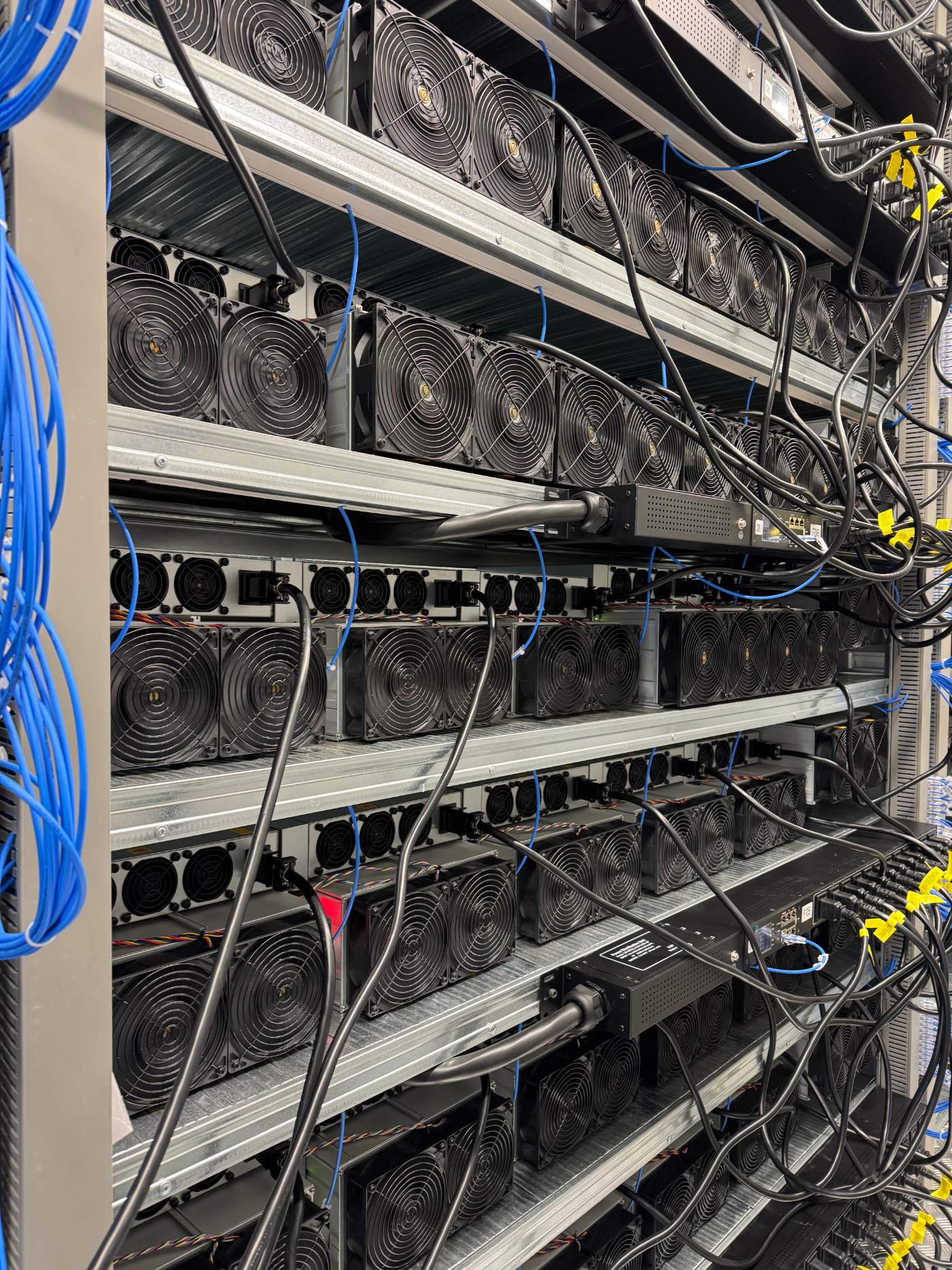
In an air-cooled site, the noise is airflow moving in volume, not one loud component that can be isolated and treated on its own. Fans pulling air through an intake wall, across the machine row and out through an exhaust path are the site's whole acoustic signature, along with any auxiliary cooling running alongside them. That means noise scales with fan load, not with the number of enclosures, and a fleet configured to move more air moves that much more sound with it. The mechanism is the same pressure difference covered in our container sites guide: fans forcing air along a defined route, and every part of that route contributing to what is heard past the boundary.
Because the source is spread across the whole intake and exhaust surface rather than concentrated in one unit, treating it after the fact is harder than designing for it before the first container is placed.
Why night and weather change how it lands
Noise that is unremarkable at midday can still draw a complaint after dark, and that is not inconsistency on a neighbour's part, it is how sound behaves. Background noise (traffic, other industry, wind moving through trees) is higher during the day and drops away at night, so the same site noise sits further above the background and is easier to notice. Weather changes the picture again: wind can carry sound towards a boundary it does not usually reach, and certain conditions bend sound back down towards the ground rather than letting it disperse upwards, so a still, cool night can carry noise further than a windy afternoon does. A site that sounds acceptable on the afternoon you visit may not sound the same at the hour a neighbour is trying to sleep, which is why one daytime impression is not enough to judge it by.
What mitigation costs, in air or in money
Every way to reduce noise from an air-cooled site trades against something else, usually airflow or capital. Slowing the fans reduces noise but also reduces the volume of air moving through the row, which either caps how hard the machines can run or pushes the same air through other fans working harder to compensate. Acoustic enclosures and baffling absorb sound without touching the airflow itself, but they add cost, and maintenance access has to be designed around them rather than straight through them. Orientation (positioning intake and exhaust away from the nearest boundary rather than towards it) costs nothing beyond getting the layout right at the start, which is why a decision made early is cheaper than a mitigation fitted after a complaint. Ask which of these a site relies on, because the answer says whether noise was a design decision or something added on afterwards.
Distance is the cheapest of these levers, because it costs nothing to design in and nothing to maintain afterwards. Sound loses energy as it travels and as it crosses ground and vegetation, so the space between the source and the nearest boundary does real work without a single fan being touched. A site with room between its equipment and the edge of its land starts from a position every other mitigation is trying to reach after the fact, which is why the size and shape of a site's own boundary deserves the same weight as anything mechanical inside it.
Measurement, complaints and how they play out
Ask who takes noise measurements at a site: the operator's own staff on a routine basis, an independent consultant, or only the local authority responding to a complaint after the fact. A site that checks its own noise before anyone raises it is managing the risk. A site that first learns its noise level from a complaint is managing the aftermath, which is a different posture entirely. Complaints tend to follow a pattern of their own: an initial approach to the operator, escalation to whichever local authority handles environmental matters if that contact does not resolve it, then a period of measurement and negotiated mitigation that can constrain how the site runs while it is under way. None of that is unusual, but it is slower and more disruptive than solving the same problem at the design stage. Ask a prospective host how a complaint has been handled before, rather than whether one has ever happened.
What to ask before you commit to a site
A short list is enough to structure a site visit around the question of noise specifically, rather than folding it into a general walk-through:
- Ask what generates the site's noise floor: fan load alone, or fans plus auxiliary cooling.
- Ask whether fan speed is ever reduced to manage noise, and what that trades against.
- Ask who measures noise, on what schedule, and whether a recent reading is available to see.
- Ask how the site is oriented relative to its nearest boundary and what sits on the other side.
- Ask how a past noise complaint was handled, from first contact through to resolution.
Stand at a few points around the boundary during the visit, not only near the entrance, and put the same questions to whoever runs the site day to day rather than whoever is showing you around.
Our operations page sets out the specification every one of our facilities follows for power, cooling, network and access; how noise is handled at a given facility is best judged by standing at its boundary during a site visit.