What is required, what is sensible and what insurers ask for in a container deployment, plus the failure modes that start fires.
A container packed with several hundred ASICs concentrates a lot of current, a lot of connectors and very little space, which is why fire risk sits high on the list for anyone reviewing a site for their own fleet or for an insurer. What follows is where that risk comes from, what detection and suppression can and cannot do inside a sealed steel box with strong airflow, and what to ask before you sign off on a site.
Where fires start in a mining container
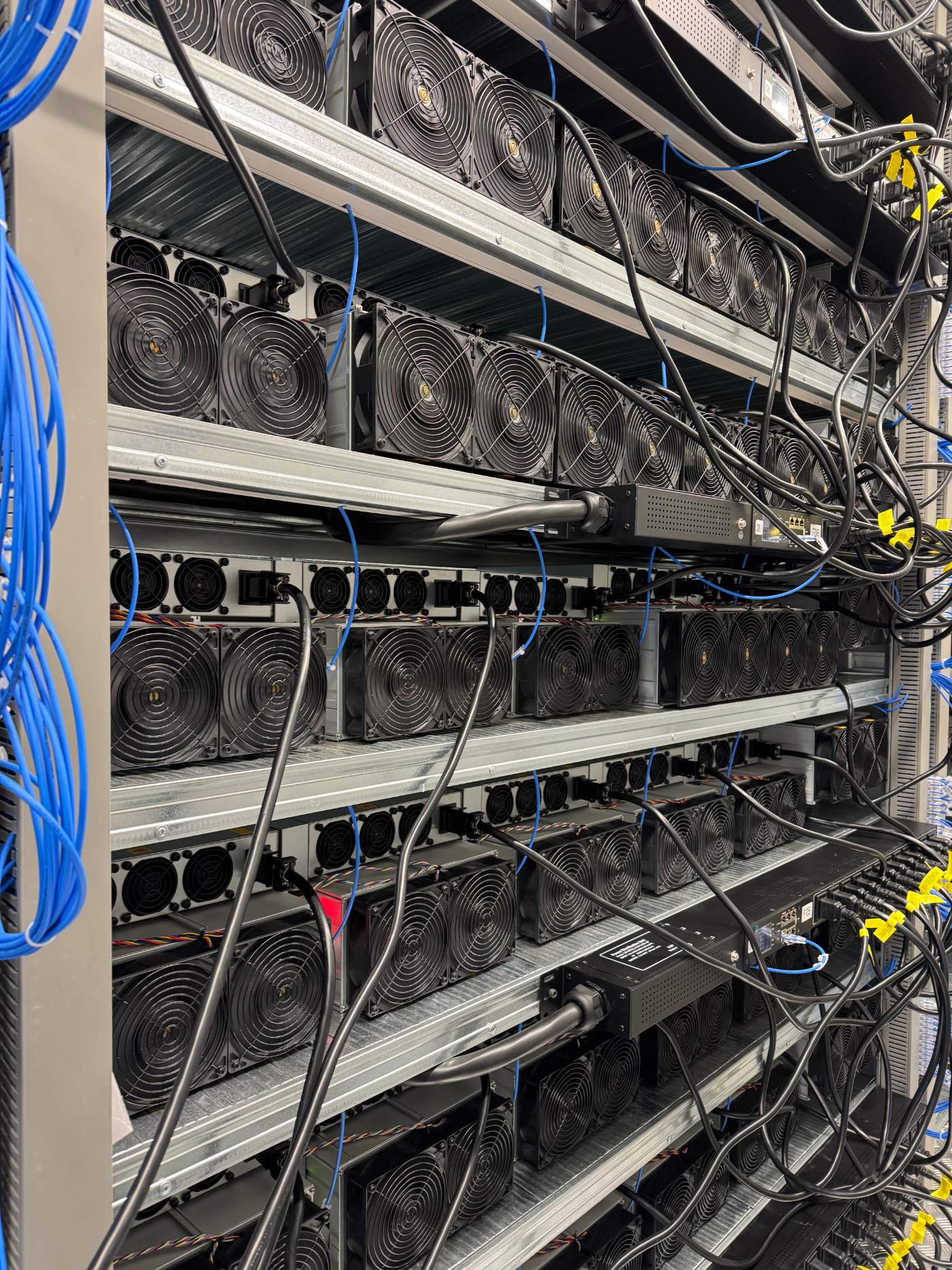
Most fires in a container do not start with the boards themselves. They start at a connection: a barrel connector, a terminal block or a power lead that was not fully seated, working loose under vibration and thermal cycling until contact resistance rises and the joint runs hot. A loose or corroded connection carrying meaningful current is one of the most common ignition points in this kind of deployment, and it is also one of the hardest to see from outside, since nothing about it looks wrong until it has already been running hot for a while.
Dust is the second driver, and it works two ways. It coats components and reduces the airflow that would otherwise carry heat away, and it settles on connectors and boards where it can bridge a gap or hold moisture against a joint that would otherwise stay dry. A container that runs a serious filtration and cleaning routine is addressing this risk as much as it is addressing thermal performance; our piece on air-cooled container sites covers what that routine involves.
Power supplies are the third source, since they carry the electrical stress of the whole unit and fail in ways that range from a quiet shutdown to a component failure that generates heat or arcing. Cabling failure sits alongside them: an overloaded circuit, a cable run that was not sized for the load it now carries, or insulation damaged during installation or a later service visit. These are ordinary electrical faults, more common in a dense, vibrating, dusty enclosure than in a conventional server room.
Detection, and its limits in a strong airflow
A container running hundreds of fans moves a lot of air, and that airflow works against conventional smoke detection. Point smoke detectors rely on smoke reaching the sensor in a useful concentration, and a fast-moving airstream dilutes and redirects smoke before it does that, which is why a detector that would respond quickly in a still room can be much slower, or miss the event altogether, inside a container under full airflow.
Aspirating detection addresses this by actively drawing air samples from multiple points along the row into a central detector, rather than waiting for smoke to reach a fixed point. It is better suited to a high-airflow enclosure for that reason, though it depends on sample points being placed where a fire is likely to start, which brings the question back to the ignition points above: connectors, power supplies and cable runs rather than open floor space.
Heat detection is the other common layer, less affected by airflow but slower to respond, since it needs a real temperature rise rather than a trace of smoke. The useful question is not which single technology a site uses, but how the detection layout was matched to where a fire is likely to start, and how quickly an alarm reaches someone who can act on it.
Suppression, and what it can do in an open enclosure
Suppression is where a container's format works against the ready-made answer. Clean-agent flooding systems (the kind used in sealed data halls) work by holding an extinguishing concentration in the space for long enough to starve a fire of oxygen, and that only works if the enclosure holds the agent. A container that vents heavily to keep several hundred machines cool is, by that same design, not built to hold a gas concentration, so a flooding system sized for a sealed room will not perform the same way once fans are drawing air through it.
That does not mean suppression is pointless in a container, it means the mechanism has to match the enclosure. Some sites seal a container tightly enough (with fans set to shut down as part of the suppression sequence) to make agent flooding workable for a defined event window. Others rely more heavily on early detection and rapid electrical isolation, treating suppression as a backstop rather than the primary defence, since cutting power to a developing fault can stop it before flooding is even needed. Ask which approach a site has taken and why, since a container running a suppression system with the fans left running through an event is not doing what it looks like it is doing on paper.
Shutdown, isolation and stopping one fault from spreading
The most useful fire safety feature in a container is often not the suppression system at all, it is how fast and how completely the site can cut power to a developing fault. That means an automatic trip on the affected circuit or zone, isolation of that zone from adjacent rows so a fault in one position does not draw current or spread heat into the next, and a manual override that lets someone on site cut power to the whole container without waiting for an automated sequence to run its course.
Ask how the container is segmented electrically: whether a fault in one row trips only that row, or whether it can take down the whole unit, and whether it can take down units next to it. Ask, too, what happens to the fans during a shutdown event, since fans that keep running can feed a fire rather than help contain it, and a sequence that stops them is a deliberate design choice rather than an accident.
What to ask, and what an insurer typically wants to see
An insurer underwriting a container mining site is not asking whether a fire is possible, they are asking whether the operator can show a documented, tested approach to catching one early and containing it. That usually means a fire risk assessment specific to the site and its equipment, records of detection and suppression testing on a regular schedule, electrical inspection records covering the connections and cabling most likely to fail, and a clear account of who is notified and what happens in the first minutes after an alarm. What counts as sufficient varies by insurer and by jurisdiction, so the answer is not a fixed checklist, it is a conversation with your broker or insurer about what they specifically want documented for a deployment like this before you rely on their sign-off.
Before you commit to a site, or renew your own policy on one, get a straight answer to a short set of questions:
- What starts a fire in this container most often, in the operator's own experience, and where are detection points placed relative to that?
- Is detection built for a high-airflow enclosure, or is it a standard point system carried over from a different kind of building?
- Does suppression assume a sealed enclosure, and if so, what happens to the fans during an event?
- How is the container segmented electrically, and does a fault in one row shut down more than that row?
- What documentation would the operator hand an insurer today, without notice?
Bring these to the site visit and ask for the answers from whoever runs the floor day to day, not from a data sheet. Our operations page covers the access control and monitoring layer that sits alongside fire safety at our own facilities, which you can check against the questions above before you look at a specific location.