How container hosting is built, from airflow and filters to noise, access and security, and what each choice costs you later.
Should your next fleet go into a container or a converted hall? In practice, the shell matters less than what a serious operator does inside it, and most buyers never get to see that part before they sign. This is what to look for.
The box, and the air path built into it
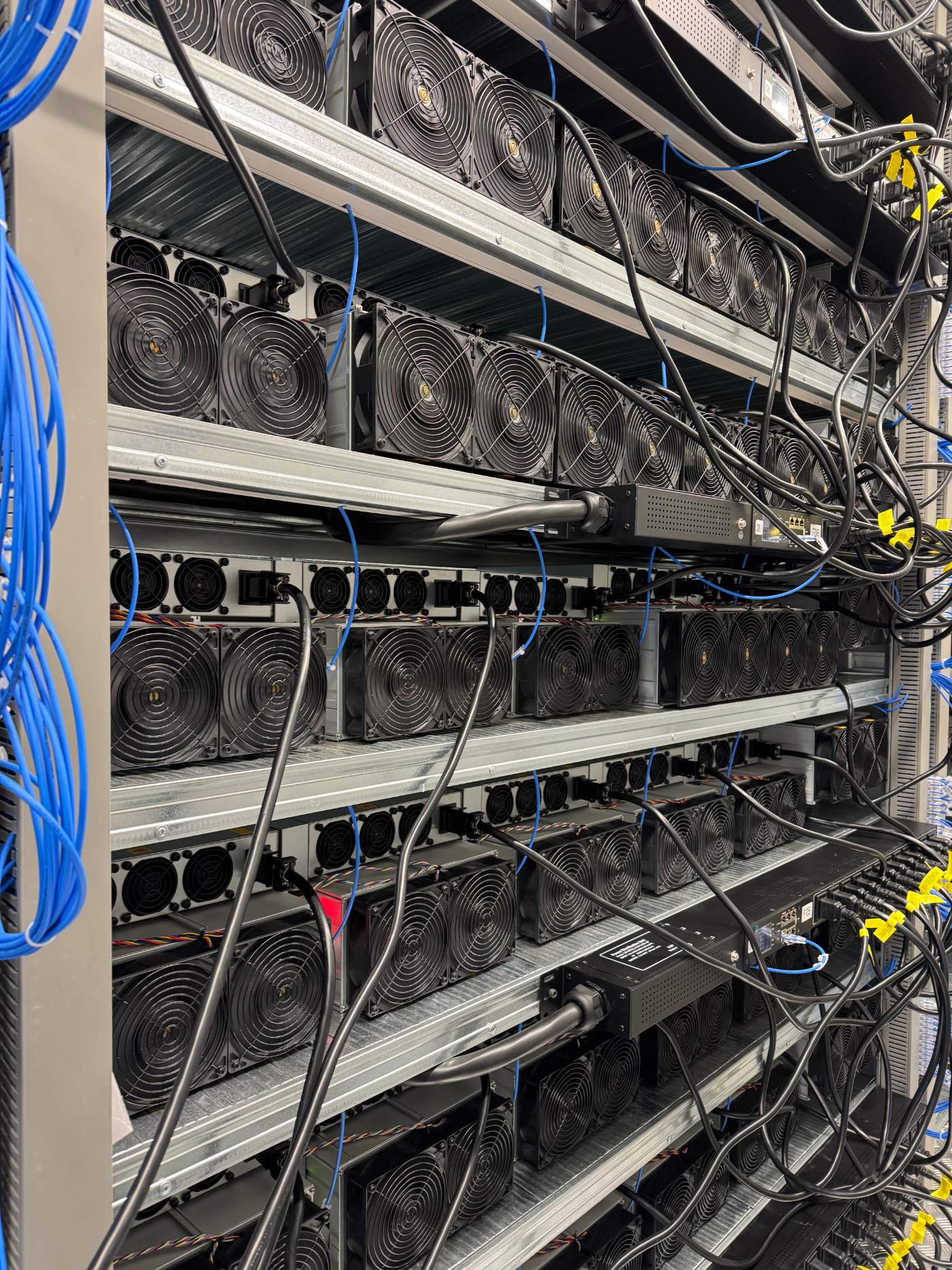
A hosting container is a steel enclosure with a defined air path built into it, not a shipping container with racks bolted in. The distinction matters. In a purpose-built unit, the intake wall, the machine rows and the exhaust path are designed together, so the fans are moving air along a route the enclosure was shaped for. In a converted general-purpose container, that route is improvised after the fact, with baffles and partitions added to compensate. Both can work. One requires more discipline to keep working, and that discipline shows up as sealed gaps, matched fan curves and a layout that does not change every time a rack gets serviced.
Ask what the container was designed for originally, and whether the airflow path was part of that design or added afterwards. The answer tells you how much of the performance depends on the shell versus on someone getting the details right every day.
Cold air enters through a filtered intake, crosses the machine row, picks up heat, and leaves through an exhaust path that is meant to keep it from finding its way back to another intake. Every point on that path is a place performance can be won or lost, and the mechanism is the same one covered in more detail in our piece on container airflow and density: a pressure difference moving air where it is supposed to go, and every gap, seam or open door giving it a shorter route back to where it started.
What is specific to a container rather than a hall is that the volume is small. A hall has room for the air to mix and even out before it becomes a problem. A container does not. A door left open, a filter that has loaded up, or a fan running below its curve shows up in the temperature spread within minutes, not hours. That is not a weakness of the format, it is a reason the operating discipline matters more than the enclosure.
Pressure, filters and the limits to ask about
The fans are sized to hold a positive pressure on the intake side, so that any leak pushes clean air out rather than pulling dust or hot air in. Ask whether the site is run on positive or negative pressure, because the answer changes what a small seal failure does to the row behind it.
Filters are the part everyone assumes is fine until they are not. A loaded filter does two things at once: it reduces the volume of air moving through the row, and it does so gradually enough that nobody notices until the temperature spread has already widened. Ask how filter condition is checked, on what schedule filters are changed, and whether that schedule is driven by a calendar or by a measured pressure drop across the filter itself. A calendar answer tells you the operator has a policy. A pressure-drop answer tells you the operator is measuring the thing that matters.
On temperature limits, the useful question is not the number on a spec sheet. It is what the site does as ambient rises towards the top of its range: whether fans ramp ahead of the load, whether the operator derates the row, or whether machines are left to throttle on their own. Each is a defensible design choice. What is not defensible is not knowing which one your site makes.
Noise, access and the site around the container
Container sites concentrate a lot of moving air in a small footprint, and that has consequences beyond thermals. Noise is one of them. Ask how the site manages it where containers sit near a boundary, a road, or another building, since a site that has had to solve this once usually has an answer ready and a site that has not will improvise on the day it becomes a problem.
Access is the other consequence. A container has one or two doors, a fixed path between rows, and no back office to route around a fault while someone works. That makes physical access control and a clear escalation path more important than they would be in a larger building, not less, because there is less room to separate a maintenance activity from the machines still running next to it. Our operations page sets out how we handle access control and monitoring across our facilities, which is the layer that sits alongside the airflow design rather than in place of it.
Maintenance without taking the row down
The question that separates a well-run container site from a poorly run one is what happens when a single machine needs service. In a badly sealed layout, opening one position changes the pressure balance for the machines around it, which is why recirculation problems so often trace back to a maintenance routine rather than a design flaw. A well-run site has a sequence for this: how a unit is pulled, how the resulting gap is covered or sealed, and how quickly it is closed up again. Ask to see that sequence rather than being told it exists.
What to ask and do before you commit
Walking a site tells you more than a spec sheet, and a short list is enough to structure that walk:
- Ask whether the container runs positive or negative pressure, and look for visible signs of sealing at row ends and cable passes.
- Ask what triggers a filter change: a calendar, or a measured pressure drop.
- Ask what the fan and control system does as ambient approaches the top of its rated range, and get a specific answer rather than a reassurance.
- Ask how a single machine is serviced without opening the row's pressure balance to the rest of the container.
- Ask how noise and access are managed at the specific site, not as a general policy.
Bring these questions to the visit rather than emailing them ahead, and watch whether the answers come from someone who runs the site day to day or from someone reciting a data sheet. That difference is usually the most reliable signal in the whole visit.
Our operations page sets out our cooling standard: air-cooled containers as the unit of capacity, added in blocks without rebuilding the facility. The finer points above, from pressure to filter changes, are best answered on the site tour that comes before a service order. Where density calls for it, our containers are hydro cooled instead, as our hydro cooling hosting page explains.