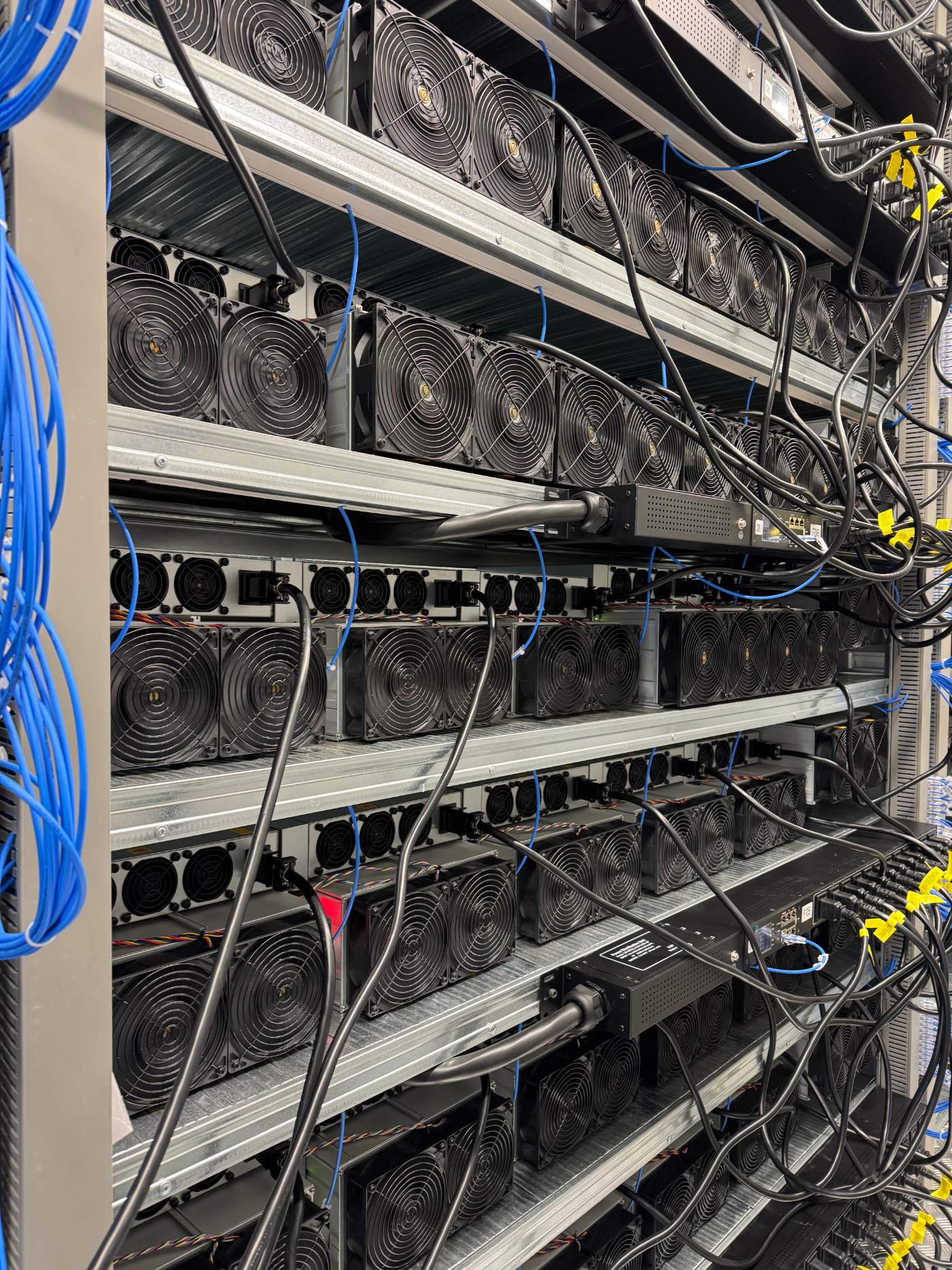
When immersion pays for itself, when it adds problems, and which questions decide the answer before anyone talks about hashrate per rack.
Immersion versus air is usually framed as a hashrate-per-rack question, and that framing gets the order backwards. Density is the last number that matters, not the first. Before anyone compares racks of output, there is a longer list of practical differences between the two approaches that decides whether immersion justifies the change for a specific fleet, and most of that list has nothing to do with cooling performance at all.
Build and running effort, what each system asks of you
An air-cooled site is built once, largely to a known pattern, and the ongoing effort is airflow discipline: filters, seals, fan curves, the kind of detail covered in our guide to air-cooled container sites. The build is familiar, the trades that install and service it are widely available, and a fault tends to announce itself as a temperature reading rather than a mess.
An immersion system is a different kind of build from the first day. Tanks, pumps, heat exchangers and a fluid loop replace fans and ducting, and the site needs staff who are comfortable working around that loop rather than around moving air. The ongoing effort shifts from airflow discipline to fluid discipline: checking for leaks, monitoring fluid condition, and keeping the loop itself in good order. Neither list of tasks is harder than the other in the abstract. They are different skills, and a site that has only ever run one of them is starting from a lower point of experience on whichever one it has not run before.
Ask directly how long the operator has run the system you are being offered at the scale you are being offered it, not just whether they have run it at all. A small pilot tank and a hall of production tanks are not the same operating problem.
Density, and what it costs somewhere else
Immersion supports higher density than air for a given footprint, and that is the number most comparisons lead with. What gets left out is what that density costs elsewhere in the site. Denser racks concentrate more heat rejection into the exchangers and the fluid loop, which raises the standard the pumps, the heat exchangers and the loop's own cooling need to be built to. A site that pushes density hard without matching that infrastructure ends up trading one bottleneck for another, just moved from the rack to the mechanical room.
Ask what the site's actual heat rejection capacity is at the density being proposed, not the density figure on its own. A higher number of machines per tank tells you nothing about whether the loop behind those tanks was sized for that load or is being asked to stretch to meet it.
Maintenance access and handling wet hardware
Pulling a machine from an air-cooled rack is a dry job that most technicians can do without special handling. Pulling a machine from an immersion tank means lifting it out coated in fluid, draining it, and handling it in a way that keeps that fluid off the floor, off other equipment and off the technician. That is not a reason to avoid immersion. It is a reason to ask what the site's actual procedure is, because a badly run wet-handling process is worse than a badly run dry one, not the same problem in a different medium.
Ask to see the maintenance sequence for a single unit: how it is lifted, drained, cleaned and either returned to the tank or set aside for further work. A site that has a defined answer for this has clearly done it enough times to have a process. A site that describes it in general terms has not.
Warranty, retrofits and the hardware you already own
This is the question that decides whether immersion is even an option for a fleet that already exists, rather than one being ordered new. Most ASICs are built and warrantied for air cooling. Converting an air-cooled unit to immersion typically means removing components the manufacturer did not design to be removed, which can affect the warranty on hardware that still has time left on it. Ask specifically whether the conversion process affects the manufacturer's warranty, and get that answer from the operator rather than assuming it does not matter because the machine still runs afterwards.
Ask, too, whether the fluid used is compatible with the specific board and component materials on your hardware. Compatibility varies by fluid chemistry and by manufacturer, and a fluid that is fine for one generation of hardware is not automatically fine for the next one you buy.
Fluid, disposal and the questions before you compare a single metric
Immersion fluid is not a one-time purchase that then disappears from the conversation. It degrades over time, needs monitoring, and eventually needs replacing or reconditioning, and disposal of used fluid is a separate operational and environmental question from running the system day to day. Ask how the site handles fluid disposal and reconditioning, and whether that is something the operator manages directly or something that gets passed back to the customer at the point a tank is decommissioned.
Before any hashrate-per-rack comparison, work through these questions with whoever is proposing immersion:
- How long has the operator run this system at production scale, not in a pilot?
- What is the site's heat rejection capacity at the density being proposed, not just the density figure?
- What does the maintenance sequence for a single unit look like, start to finish?
- Does the conversion process affect the manufacturer's warranty on your existing hardware?
- Is the fluid compatible with your specific hardware, and how is used fluid disposed of or reconditioned?
Asking them does not require picking a side between immersion and air. Both approaches run production fleets today, and the fair comparison is between two different sets of operating discipline, not between a modern option and an outdated one.
Our operations page sets out the cooling standard we build to: air-cooled containers as the rule and hydro-cooled containers where density calls for it. Our page on hydro cooling hosting sets air, hydro and immersion side by side, so you can see which of these questions applies before you bring the rest of the list to a visit.